- Introduction to Biodiversity – Definition and Levels
- Importance of biodiversity – ecological, economic and ethical values
- Biodiversity of India - Biodiversity Hotspots
- Biodiversity of Rajasthan – Flora and Fauna
- National Parks and Wildlife Sanctuaries of Rajasthan
- Threats to Biodiversity – Causes of Extinction
- IUCN Red List and threatened species
- Conservation methods – in-situ conservation
- Conservation methods – ex-situ conservation
- India's major conservation programs – Project Tiger and others
- Natural resource conservation—forests, water, and soil
- The concept of sustainable development – theory and history
- Sustainable Development Goals (SDGs) – India's Progress
- Biodiversity Conservation and Sustainable Development Efforts in Rajasthan
In 1973, when India's tiger population had dwindled to just 1,827, then-Prime Minister Indira Gandhi took a bold decision—launching "Project Tiger," under which nine sanctuaries across the country, including Ranthambore, were dedicated to tiger conservation. At the time, few believed this effort would succeed. Today, five decades later, India's tiger population has risen to 3,682 (2022 census)—nearly 80% of the world's tigers are found in India! Rajasthan's Sariska Sanctuary represents the most dramatic chapter in this story—tigers were completely wiped out in 2004-05 (not a single tiger remained). Yet, thanks to a restoration program begun in 2008, 49 tigers were roaring back in Sariska by June 2025. This story teaches that biodiversity loss is not irreversible if we take timely, scientific conservation efforts. Let us understand this important topic of biodiversity, natural resource conservation and sustainable development in detail.
1 Introduction to Biodiversity – Definition and Levels
Biodiversity (short for biological diversity) refers to the variety of all living organisms—plants, animals, and microorganisms—on Earth, and the complex relationships among them and their environments. The term was first proposed by Walter G. Rosen in 1985, and became a central theme of global policy following the signing of the Convention on Biological Diversity (CBD) at the 1992 Rio Earth Summit.
Three levels of biodiversity
| level | Description and examples |
|---|---|
| Genetic Diversity | Genetic variation among individuals within a species; examples: thousands of indigenous varieties of rice, different blood groups in humans |
| Species Diversity | The number and diversity of different species found in an area; for example, India has approximately 100,000 animal species and 50,000 plant species. |
| Ecosystem Diversity | The variety of ecosystems found in a region (see Chapter 13); examples: forests, wetlands, deserts, mountains |
All three levels of biodiversity are clearly visible in Rajasthan—at the genetic level, local animal breeds (such as the Marwari horse, Tharparkar cow, Marwari goat) and crop varieties (such as indigenous varieties of millet and fennel—see Chapter 10); at the species level, tiger, chinkara, great Indian bustard (state bird) and hundreds of other species; and at the ecosystem level, diverse ecosystems such as the Thar Desert, Aravalli forests, Keoladeo wetlands.
◆ Biodiversity ◆ Rio Earth Summit 1992 ◆ Convention on Biological Diversity (CBD) ◆ genetic diversity ◆ Species diversity ◆ Ecosystem diversity
2 Importance of biodiversity – ecological, economic and ethical values
Biodiversity is often called Earth's 'life-support system'—it not only stabilizes ecosystems but is also essential for the survival of human civilization. Its importance can be understood in three broad categories.
(A) Ecological/Environmental importance
- Ecosystem Services: Pollination, air purification, water purification, soil formation, climate regulation—all these services depend on biodiversity.
- Ecosystem stability: A system with greater biodiversity is more resilient to environmental shocks (e.g., disease outbreaks, climate change)—the more complex the food web, the more stable it is (see Chapter 13).
(B) Economic importance
- Agriculture and food security: About 75% of the world's food crops depend on pollinators (bees, butterflies); the genetic diversity of wild crop relatives is invaluable for developing future disease-resistant varieties.
- Medicine: About 50% of the world's modern medicines are based on compounds derived from natural sources (plants, microorganisms) — such as penicillin (fungus), taxol (yew tree, anti-cancer).
- Ecotourism: Sanctuaries like Ranthambore, Sariska contribute significantly to the economy of Rajasthan through tourism, generating local employment.
(C) ethical and cultural significance
Many moral philosophers argue that every species has an 'intrinsic right' to survive, whether or not it provides direct economic benefit to humans. Indian culture also has a deep tradition of biodiversity conservation—sacred forests (such as the Orans of Rajasthan, see Chapter 13), the Bishnoi community's dedication to tree and wildlife conservation (Amrita Devi Bishnoi's sacrifice in 1730 to protect Khejri trees—the historical inspiration for the Chipko movement) are prime examples.
◆ ecosystem services ◆ pollination ◆ Medicinal importance ◆ Eco-tourism ◆ Internal rights ◆ Amrita Devi Bishnoi ◆ Bishnoi community
3 Biodiversity of India - Biodiversity Hotspots
India is one of the world's 17 "mega-diverse" countries, containing approximately 7-8% of the world's known species in just 2.4% of the world's land area. Over 100,000 animal species and over 50,000 plant species have been recorded in India.
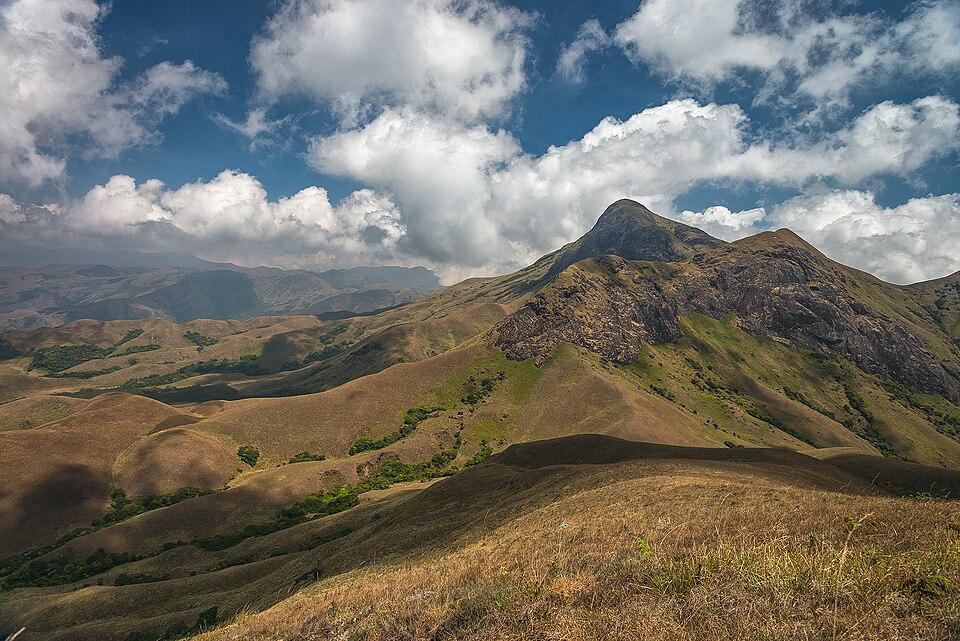
🖼️ Western Ghats — one of India's four biodiversity hotspots, home to numerous endemic species
Four Biodiversity Hotspots of India
Biodiversity hotspots are areas that have exceptionally high species diversity and endemism, but also face severe anthropogenic threats – a concept proposed by British ecologist Norman Myers in 1988.
- Western Ghats and Sri Lanka: Widespread across Kerala, Karnataka, Tamil Nadu, and Maharashtra; many endemic amphibian and plant species.
- Himalaya: Eastern and Western Himalayas; home to rare species like snow leopard and musk deer.
- Indo-Burma: including northeastern India; Extremely rich and little-studied area.
- Sundaland: Nicobar Islands is its Indian part.
◆ Mega-Diverse Countries ◆ Biodiversity hotspots ◆ Norman Myers ◆ Endemism ◆ Western Ghats ◆ Himalayan Hotspot ◆ Indo-Burma
4 Biodiversity of Rajasthan – Flora and Fauna
Rajasthan, the largest state of India, due to its diverse geographical features—Thar Desert, Aravalli mountain range, southern moist forest region (Vagad and Mewar), eastern plains—supports a highly diverse flora and fauna, adapted to a uniquely arid and semi-arid ecosystem.
Major vegetation of Rajasthan
Khejri (Prosopis cineraria, the state tree of Rajasthan) is the most important vegetation of the desert region—it is called the 'Kalpavriksha of the Desert' because it provides fodder, fuelwood, and shade to animals, and its deep roots prevent soil erosion. Other important vegetation includes the Rohida (Tecomella undulata, the state flowering tree of Rajasthan), acacia, kair, ber and savan grass, which show special adaptations to desert and semi-arid conditions, unlike the teak and salar forests of southern Rajasthan.
Major fauna of Rajasthan
| species | Situation in the state |
|---|---|
| Tiger | In Ranthambore, Sariska, Mukundra; not the state animal but a major attraction |
| Chinkara | The state animal of Rajasthan; a deer found widely in the desert region |
| Great Indian Bustard | State bird of Rajasthan; Critically Endangered, mainly in Desert National Park |
| Camel | Declared state animal (2014); integral to desert life and economy |
| Stork croaks | Keoladeo Ghana National Park is one of the major migratory birds. |
Urgency of Great Indian Bustard Conservation:The Great Indian Bustard (Great Indian Bustard) is one of the world's heaviest flying birds, with a global population of just around 150 remaining, most of which are found in the Desert National Park in the Jaisalmer region of Rajasthan. Collisions with high-altitude transmission power lines are a major cause of mortality—hence the 'Great Indian Bustard Conservation Project', which involves undergrounding power lines and installing bird diverters in critical areas.
◆ Khejri ◆ Rohida ◆ chinkara ◆ Great Indian Bustard ◆ Camel State Animal ◆ seven grass ◆ Great Indian Bustard Conservation Project
5 National Parks and Wildlife Sanctuaries of Rajasthan
Rajasthan plays a leading role in biodiversity conservation through its network of protected areas, which include national parks, wildlife sanctuaries and tiger reserves.
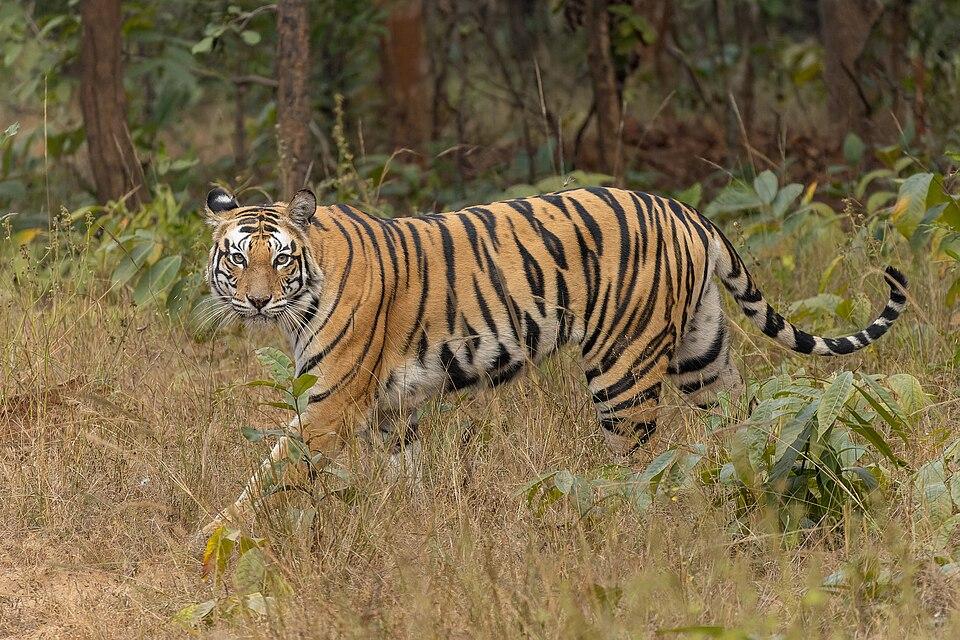
Bengal tiger (Panthera tigris tigris) – a major attraction of Rajasthan's tiger reserves such as Ranthambore and Sariska
Five Tiger Reserves of Rajasthan
| Tiger Reserve | District | Speciality |
|---|---|---|
| Ranthambore | Sawai Madhopur | The state's most famous tiger population; approximately 88 tigers (as per 2022 census) |
| Sariska | Alwar | Successful restoration after tiger extinction in 2004-05; 49 tigers by June 2025 |
| Mukundra Hills | quota | Notified in 2013; part of the Chambal River basin |
| Ramgarh Vishdhari | Bundi | One of the newest tiger reserves in the state |
| Dholpur-Karauli | Dholpur and Karauli | The state's fifth and newest tiger reserve |
💡 Sariska — One of the world's most remarkable tiger recovery stories: Tigers completely disappeared from Sariska in 2004-05 due to poaching—one of the biggest setbacks in India's wildlife conservation history. However, since 2008, a reintroduction program has been launched in Sariska, led by the National Tiger Conservation Authority (NTCA), by translocating tigers from Ranthambore. In less than two decades, Sariska has 49 tigers by June 2025—proving that even severe biodiversity loss can be reversed with scientific planning and political will.
Other major protected areas of Rajasthan
- Keoladeo Ghana National Park (Bharatpur): UNESCO World Heritage Site; winter home to thousands of migratory birds, including the Siberian crane.
- Desert National Park (Jaisalmer): Desert ecosystem conservation; major habitat of the Great Indian Bustard.
- Sajjangarh Wildlife Sanctuary (Udaipur), Jaisamand Wildlife Sanctuary, Talchhapar Blackbuck Sanctuary (Churu): Other important protected areas of the state.
◆ Ranthambore ◆ Sariska Tiger Relocation ◆ Mukundra Hills ◆ Ramgarh Vishdhari ◆ Dholpur-Karauli ◆ Keoladeo Ghana ◆ Desert National Park ◆ NTCA
6 Threats to Biodiversity – Causes of Extinction
According to scientists, Earth is currently experiencing the sixth major mass extinction in its history—but unlike the first five (such as the extinction of the dinosaurs), this current one is primarily caused by anthropogenic factors.
| cause of danger | Brief summary |
|---|---|
| Habitat Loss | Deforestation, urbanization, agricultural expansion — the biggest causes of extinction |
| Overexploitation | Poaching, overfishing, uncontrolled collection of forest products |
| pollution | Air, water and soil pollution (see Chapter 13) poisoning the habitat of species |
| Climate change | Changing temperature and rainfall patterns making the species' natural habitat unsuitable |
| Invasive Species | introduction of alien species that compete for resources with native species |
| Pressure on climate-adapted species | Great Indian Bustard in Rajasthan – threatened by power lines, habitat loss and overgrazing |
Scientific estimates suggest that the current species extinction rate is 100 to 1,000 times higher than the pre-human natural rate. This is also called the Holocene extinction or Anthropocene extinction, because it is primarily caused by human activities, not any natural geological event.
◆ sixth mass extinction ◆ Habitat loss ◆ overexploitation ◆ Invasive alien species ◆ Holocene extinction ◆ Anthropocene
7 IUCN Red List and Threatened Species
The International Union for Conservation of Nature (IUCN) produces the world's most comprehensive and scientifically authoritative biodiversity conservation status list, called the IUCN Red List – which scientifically assesses the extinction risk of species and classifies them into various categories.
🖼️ IUCN Red List categories — Extinct (EX) to Least Concern (LC), with Threatened categories CR, EN, VU in between.
Major categories
- Extinct (EX): A species with no living members remaining; example: the dodo bird.
- Critically Endangered (CR): An extremely high risk of extinction in the near future; example: Great Indian Bustard.
- Endangered (EN): High risk of extinction; example: Bengal tiger (still in this category despite improvements in recent years).
- Vulnerable (VU): at risk of extinction in the medium term; example: Indian elephant.
- Near Threatened (Near Threatened — NT) and Least Concern (Least Concern — LC): Species with relatively stable populations.
The IUCN Red List is not just a scientific document, but an important basis for policy-making—India's Wildlife Protection Act 1972 (see next topic) and national conservation priorities are often set in accordance with IUCN classifications. When a species is declared 'critically endangered' (such as the Great Indian Bustard), it is a scientific signal of the need for urgent and special conservation intervention.
◆ IUCN Red List ◆ Extinct (EX) ◆ Critically Endangered (CR) ◆ Endangered (EN) ◆ Vulnerable (VU) ◆ Great Indian Bustard CR Category
8 Methods of Conservation - In-situ Conservation
In-situ conservation means conserving a species in its natural habitat—that is, 'protecting the species where it naturally lives.' This is considered the most effective method of conservation because it protects the species along with its entire ecosystem—its predators, prey, symbiotic relationships—rather than just as an isolated individual.
| Self-defense type | Speciality |
|---|---|
| National Park | Highest level of protection; human activity (grazing, forestry) is strictly prohibited; example: Ranthambore National Park |
| Wildlife Sanctuary | Less strict than a national park; some controlled human activities permitted |
| Biosphere Reserve | Large protected area, consisting of a core (full protection), buffer, and transition zones; emphasis on human-nature coexistence |
| Sacred Groves | Forest tracts protected by community/religious belief; example: Orans of Rajasthan (see Chapter 13) |
💡 Three-tier structure of biosphere reserves: A biosphere reserve consists of three zones—the central core zone (where minimal human interference and complete protection is permitted), the buffer zone (where limited, controlled scientific research and traditional activities are permitted), and the transition zone (where sustainable economic activities of local communities continue). India has 18 declared biosphere reserves, some of which are also included in the UNESCO World Network.
◆ Self-location protection ◆ National Park ◆ Wildlife Sanctuary ◆ Biosphere Reserve ◆ core-buffer-transition zone ◆ sacred grove
9 Methods of Conservation - Ex-Situ Conservation
Ex-situ conservation means protecting a species outside its natural habitat, under controlled/artificial conditions—it is especially used when a species' natural population has declined so much that in-situ conservation alone is not sufficient, or when the natural habitat itself is not secure.
| Types of off-site protection | Characteristics and examples |
|---|---|
| Zoo | Conservation of animal species, breeding programs and public awareness; example: white tiger breeding at Nandankanan Zoological Park (Odisha) |
| Botanical Garden | Live collection and conservation of plant species |
| Seed/Gene Bank | Long-term conservation of genetic material (see Chapter 10); examples: NBPGR, Svalbard Seed Vault |
| Tissue Culture Bank | Laboratory-based conservation and reproduction of tissues of rare plant species |
| Cryopreservation | Long-term preservation of seeds, sperm and embryos at extremely low temperatures (up to -196°C, in liquid nitrogen) |
| 🏞️ Self-Location Protection | 🏛️ Out-of-place protection |
|---|---|
| ◆ conservation in its natural habitat ◆ Security, including the entire ecosystem ◆ Requires large area and long-term management | ◆ Outdoors, under controlled conditions ◆ Last resort for critically endangered species ◆ Population restoration possible through breeding programs |
◆ Off-site protection ◆ Zoo ◆ Botanical Garden ◆ Seed banks ◆ cryopreservation ◆ Tissue Culture Bank
10 India's major conservation programs – Project Tiger and others
India has launched several ambitious national programmes to conserve its rich but endangered biodiversity, some of which are considered global success stories.
| Program | Year | Achievement |
|---|---|---|
| Project Tiger | 1973 | From 9 sanctuaries to 56 tiger reserves today; tiger population increased from 1,827 (1973 pre-estimate) to 3,682 (2022) |
| Project Elephant | 1992 | Conservation of elephant habitats and corridors, human-elephant conflict management |
| National Wetland Conservation Programme | 1985 (Revised) | Conservation of important wetlands like Keoladeo Ghana |
| Great Indian Bustard Conservation Project | 2013 (after intensification 2020) | Special breeding centre to save the critically endangered Great Indian Bustard population in Rajasthan |
| Project Cheetah | 2022 | Reintroduction of African cheetahs to India (Kuno National Park, Madhya Pradesh) — the cheetah was declared extinct in India in 1952 |
💡 Project Tiger – Five Decades of Achievement: Launched in 1973, Project Tiger is considered one of the world's most successful wildlife conservation programs. Today, 56 tiger reserves operate across the country under the National Tiger Conservation Authority (NTCA), covering an area of approximately 82,000 square kilometers. India today harbors approximately 80% of the world's total wild tigers—the world's largest tiger population concentrated in a single country. The sixth All India Tiger Estimation began in late 2025, with the final report expected by July 2027.
◆ Project Tiger 1973 ◆ NTCA ◆ Project Elephant ◆ Great Indian Bustard Conservation Project ◆ Project Cheetah ◆ Kuno National Park ◆ All India Tiger Census
11 Conservation of natural resources – forests, water and soil
The fundamental basis of biodiversity conservation rests on the conservation of three major natural resources – forests, water and soil – because these resources are the foundation of the entire ecosystem.
Forest Conservation
India's National Forest Policy (1988) aims to bring at least 33% of the country's total geographical area under forest/tree cover—currently it is around 24–25%. Programs such as Social Forestry and Agroforestry promote tree plantations with the participation of local communities.
Water conservation
Rainwater harvesting, groundwater recharge, and efficient irrigation techniques (drip/sprinkler irrigation) are key to water conservation. Rajasthan's traditional water conservation systems (johads, stepwells, and tankas—see Chapter 13) are globally acclaimed in this field.
soil Conservation
Soil conservation measures include contour ploughing, terrace farming, preventing soil erosion through tree plantation, and organic farming (reduced chemical fertilizer/pesticide use) – all of which help maintain soil fertility and productivity in the long term.
Forest, water, and soil conservation are deeply interconnected—tree roots hold soil together (preventing erosion), healthy soil better absorbs rainwater (recharges groundwater), and adequate water supports vegetation growth. Therefore, environmental conservation policies should consider these three from an integrated perspective, not in isolation.
◆ National Forest Policy 1988 ◆ Social Forestry ◆ rainwater harvesting ◆ groundwater recharge ◆ contour plowing ◆ terrace farming ◆ Holistic Resource Management
12 The concept of continuous development – theory and history
The most famous and widely accepted definition of sustainable development is the 1987 Brundtland Report ("Our Common Future").Our Common Future) – ‘development that meets the needs of the present generation in a manner that does not compromise the ability of future generations to meet their own needs.’ This definition was presented by a United Nations commission chaired by the then Prime Minister of Norway, Gro Harlem Brundtland.
Three pillars of sustainable development
| 🌍 Environmental Sustainability | 💰 Economic Stability |
|---|---|
| ◆ judicious use of natural resources ◆ Ecosystem Conservation ◆ Pollution and carbon emission control | ◆ Inclusive and sustainable economic growth ◆ Efficient and equitable use of resources ◆ Poverty eradication |
The third pillar—social equity—ensures that the benefits of development reach all sections of society, especially marginalized communities, equitably. The balance between these three pillars—environment, economy, and society—is the hallmark of truly sustainable development.
The 1972 Stockholm Conference first linked environment and development; the 1987 Brundtland Report popularized the term "sustainable development"; the 1992 Rio Earth Summit produced concrete frameworks such as Agenda 21 and the Convention on Biological Diversity; in 2015, the United Nations transformed this concept into 17 concrete, measurable goals by adopting the Sustainable Development Goals (SDGs, detailed in the next topic).
◆ continuous development ◆ Brundtland Report 1987 ◆ Gro Harlem Brundtland ◆ Environmental pillar ◆ Economic pillar ◆ social inclusion ◆ Stockholm Conference 1972
13 Sustainable Development Goals (SDGs) – India's Progress
In September 2015, the United Nations General Assembly adopted the 2030 Agenda for Sustainable Development, which centers on 17 Sustainable Development Goals (SDGs) – successors to the 2000 Millennium Development Goals (MDGs), but more comprehensive and applicable to all countries (not just developing ones).
🖼️ The United Nations' 17 Sustainable Development Goals (SDGs) — a global agenda to be achieved by 2030

The 17 goals include poverty eradication, end hunger, health and well-being, quality education, gender equality, clean water-sanitation, affordable clean energy, decent work-economic growth, industry-innovation-infrastructure, reduction of inequality, sustainable cities-communities, responsible consumption-production, climate action, aquatic life conservation, terrestrial life conservation (directly linked to biodiversity), peace-justice-strong institutions, and partnerships for the goals.
| indicator | India's position (2025) |
|---|---|
| Global SDG Index Rank | 99th place (out of 167 countries), score 67 — a significant jump from 109th in 2024, making the top 100 for the first time |
| SDG India Index (Domestic, NITI Aayog) | Overall score 71 (2023-24) — a steady improvement from 57 in 2018 |
| Goals that are likely to be achieved soon | SDG-7 (Clean Energy), SDG-11 (Sustainable Cities), SDG-12 (Responsible Consumption) — Projected National Achievement by 2025-26 |
| Progressive goals | SDG-3 (Health) is projected to be achieved by 2026-27; SDG-2 (Hunger) and SDG-5 (Gender Equality) by 2027-28 |
The responsibility of monitoring and implementing the SDG goals in India lies with NITI Aayog (National Institution for Transforming India), which annually releases the 'SDG India Index' – it measures the progress of states and union territories towards the SDG goals through scores and ranks, thereby promoting healthy competition and accountability among states.
◆ 17 SDGs ◆ 2030 Agenda ◆ Millennium Development Goals (MDGs) ◆ Global SDG Index 99th place ◆ SDG India Index ◆ NITI Aayog
14 Biodiversity Conservation and Sustainable Development Efforts in Rajasthan
Despite its unique ecological challenges (see Chapter 13), Rajasthan is taking several notable initiatives in the field of biodiversity conservation and sustainable development, which reflect a balance between traditional knowledge and modern policy making.
State-level conservation policies
- Rajasthan State Biodiversity Board: Constituted under the Biodiversity Act 2002 (see Chapter 13), it works for the conservation, sustainable use of biological resources in the state and preservation of traditional knowledge of local communities.
- Biodiversity Management Committees (BMC): Formed at the Gram Panchayat level, which document local biological resources (such as medicinal plants, indigenous seed varieties) through the People's Biodiversity Register.
- Dedicated Breeding Centre for Great Indian Bustard Conservation (Jaisalmer): An ambitious project to incubate eggs under controlled conditions and raise chicks after releasing them into the wild, a combined model of ex-situ and in-situ conservation.
Rajasthan's steps towards sustainable development
- Leader in Renewable Energy: Bhadla Solar Park (Jodhpur) and Jaisalmer wind farms make Rajasthan one of the largest clean energy producing states in India – directly contributing to SDG-7 (clean energy) and SDG-13 (climate action).
- Water conservation models: Traditional systems like johads and tankas (see Chapter 13) are Rajasthan's unique contributions towards SDG-6 (clean water and sanitation).
- Community Forest Management: Conservation of orans and other sacred groves strengthens SDG-15 (Landscaped Life) with the active participation of local communities.
- Ecotourism-based livelihoods: Employment generation for local communities around protected areas such as Ranthambore, Sariska and Keoladeo, establishing a positive link between conservation and economic development (SDG-1, SDG-8).
The story of Rajasthan—whether it's tiger reintroduction in Sariska, water conservation through johads, or the clean energy revolution through the Bhadla Solar Park—shows that even the most arid and ecologically challenging regions, if combined with traditional knowledge and modern science and strong policy will, can become a national model for both biodiversity conservation and sustainable development. This is the central message of this chapter—conservation and development are not contradictory, but can complement each other.
Questions related to biodiversity and sustainable development of Rajasthan are asked very regularly in RAS exam – memorizing the names and locations of Great Indian Bustard, Sariska restoration, Johar system and Biosphere/National Parks of the state is essential for answer writing, and presenting them in relation to SDG goals provides analytical depth to the answer.
◆ Rajasthan State Biodiversity Board ◆ Biodiversity Management Committees ◆ People's Biodiversity Register ◆ Great Indian Bustard Breeding Centre ◆ Bhadla Solar Park ◆ Conservation-development coexistence
• Biodiversity has three levels: genetic, species, and ecosystem diversity; its importance spans three dimensions: ecological (ecosystem services), economic (agriculture, medicine, tourism), and ethical. • India is among the 17 mega-diverse countries in the world, with four biodiversity hotspots – the Western Ghats, the Himalayas, Indo-Burma and Sundaland. • Rajasthan's biodiversity includes the Khejri (shrimp), Rohida (shrike), Chinkara (shrike), Great Indian Bustard (state bird, critically endangered), and Camel (state animal); the state has five tiger reserves—Ranthambhore, Sariska, Mukundra, Ramgarh Vishdhari, and Dholpur-Karauli. • The successful restoration of Sariska after the tiger extinction of 2004-05 (49 tigers by June 2025) is an inspiring global example of biodiversity restoration. • Biodiversity is threatened by habitat loss, overexploitation, pollution, climate change, and invasive species—the current sixth mass extinction is largely anthropogenic; the IUCN Red List classifies species from EX to LC. • There are two main methods of conservation—in-situ (national parks, sanctuaries, biosphere reserves) and ex-situ (zoos, seed banks, cryopreservation); Project Tiger (1973) and Project Cheetah (2022) are India's major conservation programs. • Natural resource conservation (forests, water, soil) is interconnected and is the foundation of biodiversity conservation. • The Brundtland definition of sustainable development (1987) is based on the balance of three pillars: environment, economy, and society; the 17 SDGs adopted in 2015 translate this concept into measurable targets. • India ranked 99th on the global SDG Index in 2025, breaking into the top 100 for the first time; the SDG India Index monitors domestic progress. • Rajasthan State Biodiversity Board, Great Indian Bustard Conservation Centre, Bhadla Solar Park and traditional systems like Johad make the state a national model in both biodiversity conservation and sustainable development.