- The History of Vaccines—From Edward Jenner to the Modern Era
- Types of vaccines – inactivated, attenuated, subunit and toxoid vaccines
- Types of Vaccines — Vector-Based Vaccines
- mRNA technology – principles and methodology
- mRNA Vaccines—Role in COVID-19 and Future Applications
- Vaccines in India — Covaxin, Corbevax, ZyCoV-D and Gemcovac-19
- CRISPR-Cas9 — discovery and fundamentals
- CRISPR-Cas9 – Function in Detail
- Medical applications of CRISPR — Casgevy and the treatment of genetic diseases
- Agricultural, diagnostic and other applications of CRISPR and ethical questions
- Artificial Limbs – History and Types
- Artificial organs — 3D bioprinting and xenotransplantation
- Recent developments and institutions in India
- Health Innovations in Rajasthan and the Future Direction
In 1796, Edward Jenner, a rural physician in England, made a remarkable observation: milkmaids who contracted a mild cowpox while milking cows never developed the dreaded smallpox. Jenner conducted a daring experiment: he deliberately infected an 8-year-old boy, James Phipps, with cowpox, and a few weeks later exposed him to the smallpox virus. The boy did not fall ill! This marked the birth of the world's first vaccine—and the beginning of the greatest revolution in the history of medical science. Today, nearly 230 years later, that same science has advanced so rapidly that in 2020, when the COVID-19 pandemic gripped the world, scientists made history by developing a completely new technology—the mRNA vaccine—in just 11 months. Around this same time, another revolutionary technology, the CRISPR-Cas9 "gene scissors," began to prove successful in curing human genetic diseases. And on the other hand, scientists are getting closer to 3D-printing human organs in the laboratory. Let's take a closer look at these four latest revolutions in medical science.
1 History of Vaccines—From Edward Jenner to the Modern Era
A vaccine is a biological substance that 'trains' the body's immune system to recognize and fight a particular pathogen (bacteria/virus) – without actually contracting the disease. Vaccination science has come a long way since Edward Jenner's landmark 1796 experiment (described in Hooke's story) – the word 'vaccine' itself is derived from the Latin word 'vacca' (cow), commemorating Jenner's cow-based experiment.
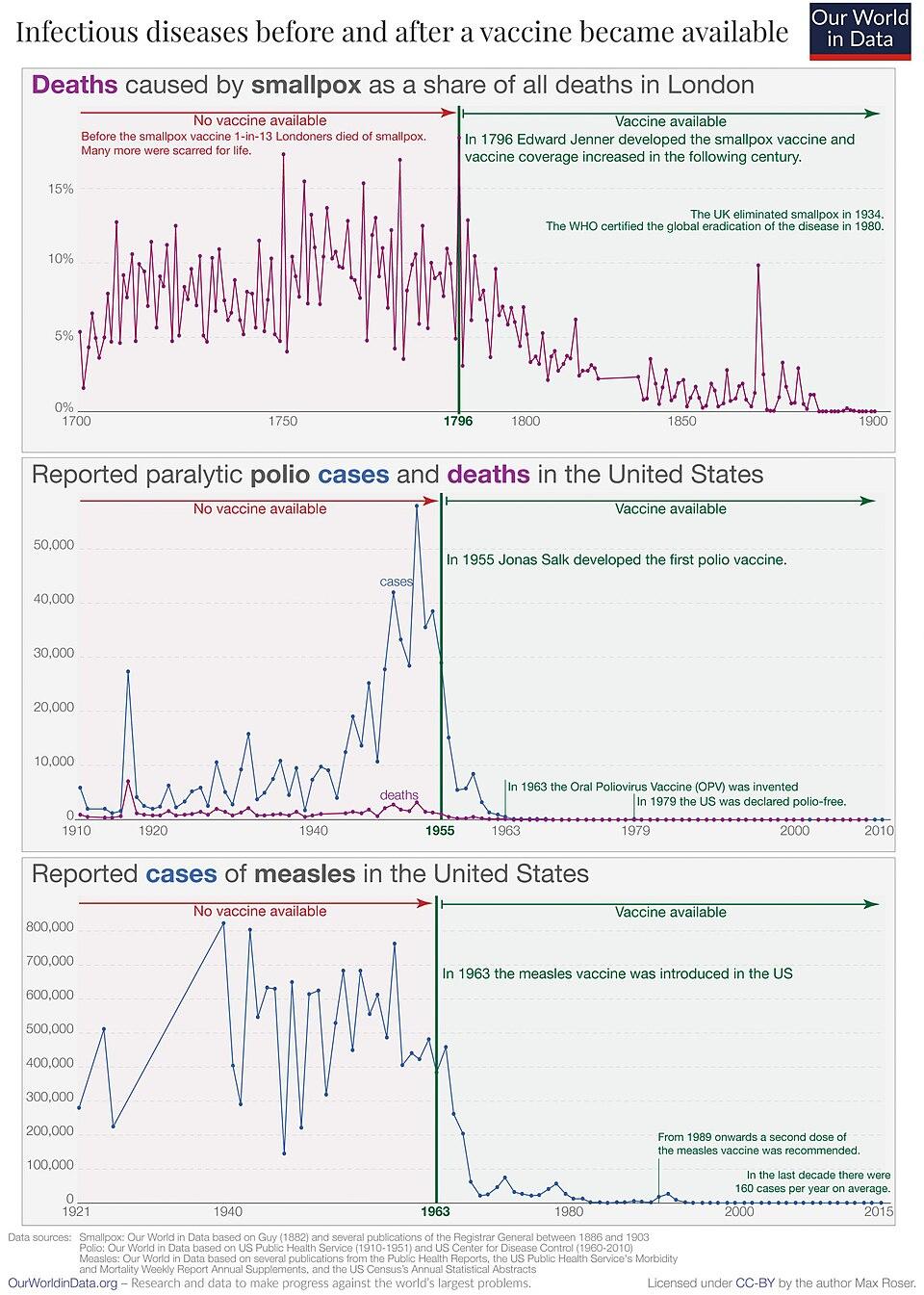
🖼️ Dramatic decline in cases of infectious diseases (smallpox, polio, measles) before and after vaccination – historical data
| Year | Scientist/Event | Contribution |
|---|---|---|
| 1796 | Edward Jenner | The world's first vaccine – against smallpox |
| 1885 | Louis Pasteur | The first rabies vaccine |
| 1955 | Jonas Salk | Inactivated polio vaccine (IPV) |
| 1963 | Sabin | Oral Polio Vaccine (OPV) |
| 1980 | WHO | Smallpox is declared globally eradicated—the first human disease to be completely eradicated. |
| 2020 | Several scientific teams | COVID-19 mRNA vaccines — developed in a record 11 months |
According to the World Health Organization (WHO), vaccination prevents approximately 3.5-4 million deaths worldwide each year, making it the most effective public health intervention in history. After smallpox (eradicated in 1980), polio is now the closest to global eradication.
◆ vaccine ◆ Edward Jenner ◆ smallpox ◆ Louis Pasteur ◆ Jonas Salk ◆ Polio eradication ◆ WHO
2 Types of vaccines – inactivated, attenuated, subunit and toxoid vaccines
Vaccines are divided into several categories based on their method of production. There are four main types of traditional vaccines, which have been in use for decades and are still useful in preventing many diseases.
| Type of vaccine | Principle | Example |
|---|---|---|
| Inactivated vaccine | Heat/chemically killed complete pathogen; safe but weak immune response, booster dose needed | Covaxin, IPV (Polio) |
| Live Attenuated Vaccine | Weakened but live pathogen; strong and long-lasting immunity | MMR (measles-mumps-rubella), BCG, OPV |
| Subunit criticism | Contains only a part of the pathogen (such as surface proteins); extremely safe | Hepatitis-B vaccine (recombinant DNA based) |
| Toxoid vaccine | an inactive form of a toxin produced by a pathogen | tetanus and diphtheria vaccines |
💡 BCG Vaccine – Why Immediately After Birth in India?: Bacille Calmette-Guérin (BCG) vaccine is an attenuated live vaccine against tuberculosis, which is given to all newborns in India soon after birth because of the high burden of tuberculosis in India (see Chapter 8). It provides protection against severe and fatal forms (such as tuberculous meningitis), especially in children.
◆ Inactivated vaccine ◆ attenuated live vaccine ◆ subunit vaccine ◆ toxoid vaccine ◆ BCG ◆ MMR ◆ IPV/OPV
3 Types of Vaccines – Vector Based Vaccines
Viral Vector Vaccines are a relatively new technology that uses a harmless virus (such as an adenovirus that infects chimpanzees and does not cause disease in humans) as a vector. The DNA of this vector virus is inserted with a gene for the target pathogen (such as the spike protein of COVID-19). When this vector virus enters the body, it instructs cells to make the spike protein, which the body then develops an immune response against—without the actual pathogen.
Vector-based vaccine in India – Covishield
The most widely used COVID-19 vaccine in India was Covishield, a vector-based vaccine developed by the University of Oxford and AstraZeneca and mass-produced in India by the Serum Institute of India (Pune) – India, being the world's largest vaccine producer, was called the 'pharmacy of the world' during the pandemic.
| 💉 Vector-based vaccines | 🧬 mRNA vaccines (more in the next topic) |
|---|---|
| ◆ Harmless viruses are used as vectors ◆ The body's own cells produce antigen proteins. ◆ Examples: Covishield (AstraZeneca), Sputnik-V, Johnson & Johnson | ◆ Direct use of mRNA molecules instead of viruses ◆ Packaged in lipid nanoparticles and delivered to the body ◆ Examples: Pfizer-BioNTech, Moderna |
◆ Vector-based vaccines ◆ Adenovirus vector ◆ Spike Protein ◆ Covishield ◆ Serum Institute of India ◆ AstraZeneca
4 mRNA technology – principles and methodology
mRNA (messenger RNA) is a fundamental molecule of cellular biology, copying 'instructions' from DNA in the nucleus to ribosomes in the cytoplasm, where proteins are made according to those instructions—this is the cell's basic 'protein-making machinery' (see Chapter 1). The basic idea behind mRNA vaccines was simple yet revolutionary—if the 'instructions' (mRNA) for a harmless protein (such as the spike protein) from a virus were given directly to the body's own cells, the cells would make that protein themselves, and the body would develop immunity against it—without introducing any live/inactivated virus into the body.
📐 How mRNA Vaccines Work – Formula/Process: Step 1: The mRNA of the desired protein (such as the virus spike protein) is synthesized in the laboratory Step 2: This delicate mRNA molecule is packaged in a protective shell of a lipid nanoparticle Step 3: The vaccine is injected and the mRNA enters the body's cells. Step 4: The cell's ribosome 'reads' this mRNA and makes that specific protein Step 5: This protein is presented on the cell surface, which is recognized by the immune system Step 6: The body makes antibodies and memory cells — protection against the real virus in the future Step 7: Within a few days, that artificial mRNA is naturally destroyed—it never integrates into human DNA.
A common misconception is that mRNA vaccines alter human DNA—this is scientifically incorrect. mRNA never enters the cell nucleus (where DNA resides); it simply remains in the cytoplasm, performing its function and breaking down on its own within a few days. This process utilizes the body's own natural cellular process (protein synthesis).
◆ mRNA ◆ ribosomes ◆ Lipid nanoparticles ◆ Spike Protein ◆ memory cells ◆ protein synthesis
5 mRNA Vaccines—Role in COVID-19 and Future Applications
When news of a new coronavirus (SARS-CoV-2) emerged in Wuhan, China, in December 2019, scientists worldwide raced to develop a vaccine in record time. Traditional vaccine development typically takes 10–15 years, but Pfizer-BioNTech and Moderna, using the speed and flexibility of mRNA technology, developed safe and effective vaccines in just 11 months—the fastest vaccine development process in medical history.
🖼️ How mRNA vaccines generate an immune response (T-cell activation) in the body
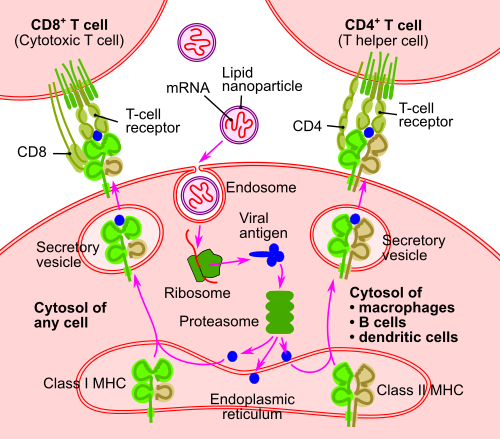
Future prospects of mRNA technology
- Personalized cancer vaccines: Creating a 'customized' mRNA vaccine tailored to the unique genetic characteristics of each patient's tumor — training the immune system to specifically recognize cancer cells from that patient.
- Vaccines for other infectious diseases: Intensive research is currently underway on mRNA-based vaccines for influenza, HIV, malaria, rabies, etc.
- Treatment of rare genetic diseases: The use of mRNA technology is not limited to vaccines – in the future it may also be used to temporarily create a missing protein/enzyme in the body.
💡 Discovery of mRNA technology – Nobel Prize 2023: Katalin Karikó and Drew Weissman were awarded the 2023 Nobel Prize in Physiology/Medicine for their fundamental discovery that made it possible to safely deliver mRNA molecules to cells while 'hiding' them from the body's immune system – a discovery that formed the foundation of COVID-19 mRNA vaccines.
◆ SARS-CoV-2 ◆ Pfizer-BioNTech ◆ Moderna ◆ Catalin Karik ◆ Drew Wiseman ◆ Nobel Prize 2023 ◆ Personalized cancer vaccines
6 Vaccines from India – Covaxin, Corbevax, ZyCoV-D and Gemcovac-19
During the COVID-19 pandemic, India not only launched the world's largest vaccination drive but also developed several indigenous vaccines – a testament to India's scientific and industrial capabilities.
| Criticism | Manufacturer | Speciality |
|---|---|---|
| Covaxin | Bharat Biotech (Hyderabad) and ICMR | India's first indigenous vaccine; inactivated virus based |
| Corbevax | Biological-E (Hyderabad) | Subunit protein based; India's first indigenous subunit COVID vaccine |
| ZyCoV-D | Zydus Cadila | World's first DNA-based COVID vaccine; delivered with a needle-free injector |
| Gemcovac-19 | Genova Biopharmaceuticals (Pune) | India's first indigenous mRNA vaccine |
Under the "Vaccine Maitri" initiative, India provided vaccines to over 100 countries through exports and grants during the COVID-19 pandemic—further strengthening India's global image as the "pharmacy of the world." India produces approximately 60% of the world's total vaccine production.
◆ Covaxin ◆ Corbevax ◆ ZyCoV-D ◆ Gemcovac-19 ◆ Bharat Biotech ◆ Vaccine Maitri ◆ Pharmacy of the World
7 CRISPR-Cas9 — Discovery and Basic Principles
Imagine that DNA is a giant book, and scientists now have 'molecular scissors' that can cut out any specific word in this book with extreme precision and paste the correct word in its place—this is CRISPR-Cas9 technology. The story of its discovery is also interesting—scientists first studied simple bacteria (such asStreptococcus pyogenes) observed a strange repetitive DNA pattern, which was named CRISPR (Clustered Regularly Interspaced Short Palindromic Repeats). Later it was discovered that this is the bacteria's own 'immune system' - when a virus (bacteriophage) attacks the bacteria, the bacteria stores a piece of that virus's DNA as a 'memory' in its CRISPR region, so that in future it can immediately recognize the same virus and destroy it with the help of Cas protein (molecular scissors).
Jennifer Doudna (USA) and Emmanuelle Charpentier (France) were awarded the 2020 Nobel Prize in Chemistry for their discovery of how this natural immune system of bacteria can be transformed into a universal tool for precisely editing the DNA of any organism – considered one of the greatest discoveries in the history of biotechnology.
| Older gene editing techniques | 🎯 CRISPR-Cas9 |
|---|---|
| ◆ Complex, expensive and time-consuming (e.g. ZFN, TALEN) ◆ A new protein had to be designed for each new target gene. ◆ Laboratory use limited to specialists | ◆ Simple, cheap and fast ◆ A new target gene can be selected by changing just one small RNA molecule (guide RNA) ◆ Accessible in thousands of labs worldwide – 'democratizing gene editing' |
◆ CRISPR ◆ Streptococcus pyogenes ◆ Red9 ◆ Jennifer Doudna ◆ Emmanuelle Charpentier ◆ Nobel Prize 2020 ◆ gene editing
8 CRISPR-Cas9 — Function in Detail
The CRISPR-Cas9 system is essentially made up of two components – a 'guide RNA' (gRNA), which, like a GPS, guides the genome to the exact location where cutting is to be done, and the Cas9 protein, which acts as the actual 'molecular scissors'.
🖼️ CRISPR-Cas9 system — assembly of guide RNA (crRNA + tracrRNA plus sgRNA) and Cas9 protein into a plasmid
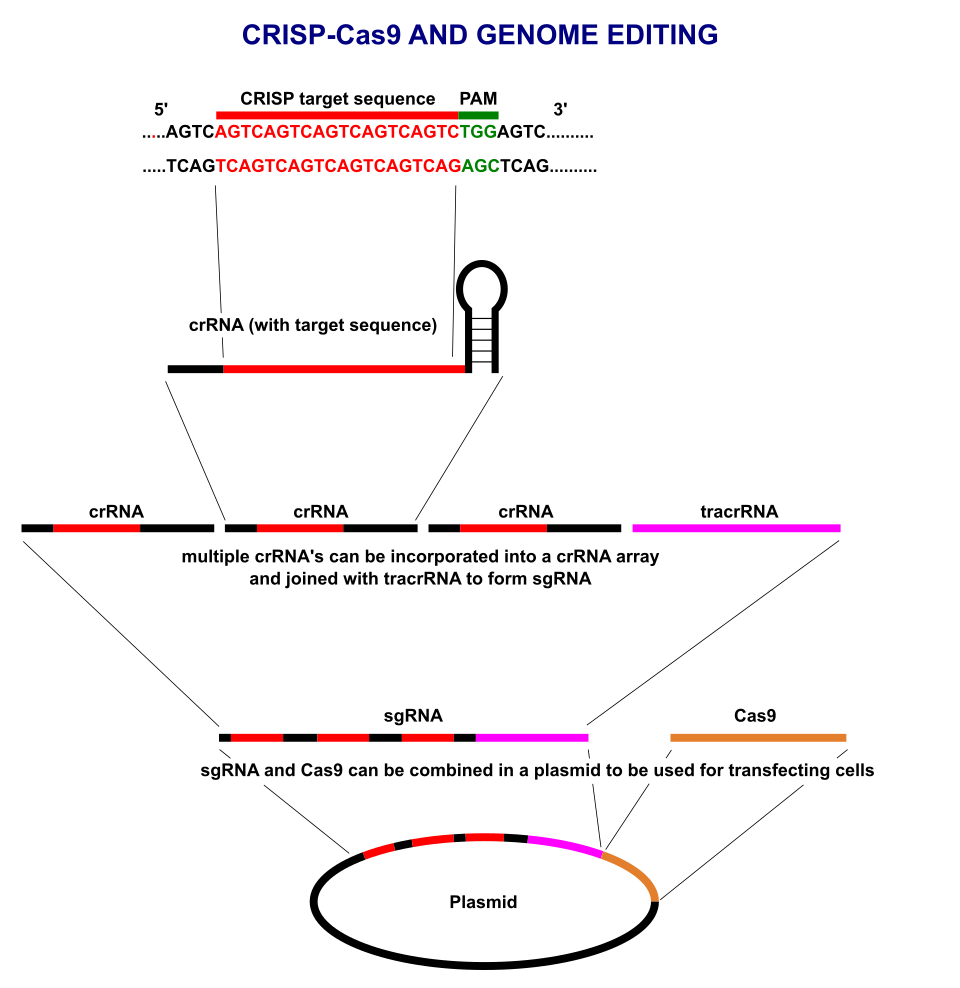
📐 CRISPR-Cas9 Gene Editing Process — Formula/Process: Step 1: Scientists design a 'guide RNA' that exactly matches the DNA sequence of the target gene Step 2: The guide RNA and Cas9 protein combine to reach the target DNA in the cell Step 3: The guide RNA binds to the correct site (by base-pairing) Step 4: The Cas9 protein cuts both strands of DNA at that precise spot Step 5: The cell's own natural repair system is activated—either the gene is disabled (knockout), or the new DNA fragment is inserted (knock-in)
PAM sequence — security checkpoint
Cas9 only cuts DNA if there is a special short sequence right next to the target site, called a PAM (Protospacer Adjacent Motif) – this acts as a kind of 'safety check', helping to prevent cutting in the wrong place.
◆ Guide RNA (gRNA) ◆ Cas9 protein ◆ base-pairing ◆ Knockout ◆ Knock-in ◆ PAM sequence ◆ DNA repair mechanisms
9 Medical Applications of CRISPR – Treatment of Caspian and Genetic Diseases
After decades of laboratory research, CRISPR technology will write a new chapter in medical history in December 2023 — when the world's first CRISPR-based therapy receives official approval.
Cassigevy (scientific name)exagamglogen autotem cell) was approved by the UK (MHRA) in November 2023 and the US (FDA) in December 2023 for the treatment of sickle cell anemia and thalassemia (see Chapter 8 and Chapter 10) – becoming the world's first approved CRISPR-based therapy.
📐 How Casgevy Therapy Works – The Formula/Procedure: Step 1: The patient's own bone marrow stem cells are removed from the body Step 2: A specific gene (BCL11A) is edited by CRISPR-Cas9 in the lab Step 3: This editing 'reactivates' the cells to re-produce fetal hemoglobin, which normally stops after birth Stage 4: This fetal hemoglobin compensates for the defective adult hemoglobin Step 5: The edited cells are transplanted back into the patient's body
CRISPR Therapy in India — BIRSA 101
India has also developed its own indigenous CRISPR-based sickle cell anemia therapy, 'BIRSA 101,' named in honor of tribal freedom fighter Bhagwan Birsa Munda—this is of particular significance given the high prevalence of sickle cell anemia in India's tribal regions. Human clinical trials are planned in Chhattisgarh to make this life-saving therapy affordable and accessible to Indian patients—as currently available foreign CRISPR therapies cost crores of rupees, making them beyond the reach of most Indian patients.
◆ Casgevy ◆ exagamglogen autotem cell ◆ BCL11A gene ◆ Fetal hemoglobin ◆ BIRSA 101 ◆ Lord Birsa Munda ◆ Chhattisgarh Clinical Trials
10 Agricultural, diagnostic, and other applications of CRISPR and ethical questions
The utility of CRISPR technology is not limited to medicine—it is also revolutionizing agriculture, diagnostics, and fundamental research.
- CRISPR in agriculture: CRISPR is a fast and precise tool for cisgenic crop improvement (see Chapter 11)—such as disease-resistant rice, more nutritious tomatoes, and "non-browning" mushrooms that slow browning, which are also permitted in the US without GMO regulation because they do not add any foreign genes, only "deactivate" existing genes.
- CRISPR in disease diagnosis: CRISPR-based technologies like SHERLOCK and DETECTR enable highly accurate and inexpensive disease testing (e.g., COVID-19, dengue) in just minutes—even faster than traditional PCR testing.
- Gene Drive: Using CRISPR to rapidly spread a specific gene throughout a population—such as controlling populations of malaria-carrying mosquitoes—is under research, although there is intense debate among scientists about its ecological risks.
In 2018, Chinese scientist He Jiankui secretly edited the genes of human embryos using CRISPR technology and gave birth to twin girls—the world's first 'germline' (see Chapter 10) human gene-editing incident, which the global scientific community condemned as highly unethical, as it lacked adequate safety testing and proper ethical approval. This incident further intensified the global ethical debate on human embryonic gene-editing and led to calls for stricter international guidelines.
◆ cisgenic crop improvement ◆ Non-browning mushrooms ◆ SHERLOCK/DETECTR ◆ gene drive ◆ He Jiankui ◆ CRISPR baby controversy
11 Artificial Limbs – History and Types
When an organ loses its function completely due to disease or accident, and a donor organ is not available for natural transplant (which is a global problem – in most countries, including India, the waiting list for organ donation is much longer than the actual number of organs available), artificial organs become an important life-saving option.
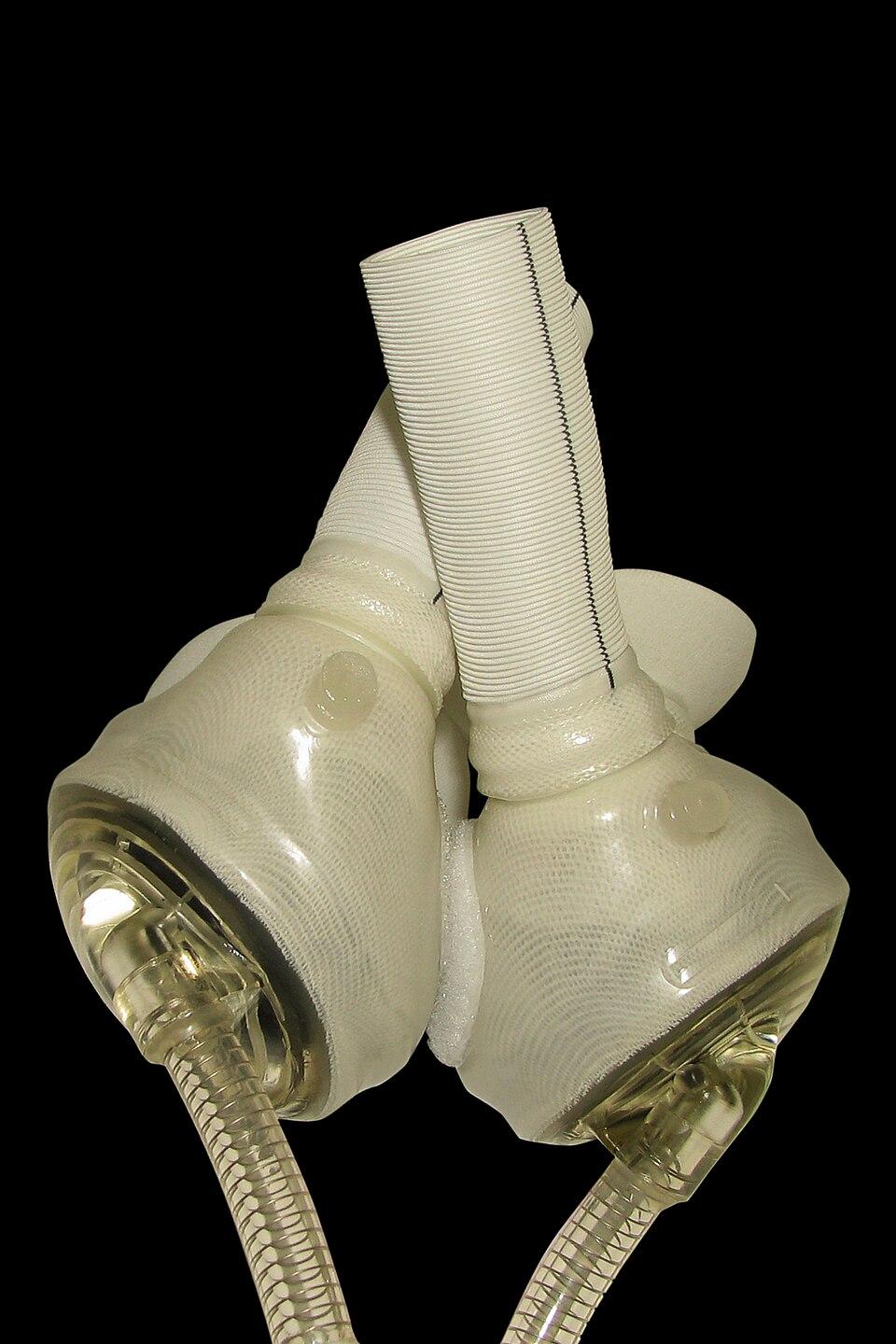
🖼️ CardioWest Total Artificial Heart — a mechanical device temporarily implanted in patients with severe heart failure
| prosthesis | Function/Use |
|---|---|
| Total Artificial Heart | Temporary support in severe heart failure while awaiting transplantation |
| Ventricular assist devices (VAD) | mechanically assisting the pumping ability of a weakened heart |
| Artificial kidney (dialysis machine) | Filtering waste products from the blood in kidney failure (see Chapter 5) |
| Artificial Pancreas | Automated insulin delivery based on blood sugar levels in type 1 diabetes |
| cochlear implant | Stimulating the auditory nerve by converting sound into electrical signals in severe hearing loss |
💡 Jarvik-7 — Early history of the artificial heart: The Jarvik-7, designed by Dr. Robert Jarvik in 1982, was the world's first permanently implanted total artificial heart, implanted in a patient named Barney Clark, who lived with it for 112 days. This was a landmark medical achievement, laying the foundation for all future artificial heart devices.
◆ prosthesis ◆ Total Artificial Heart ◆ Ventricular assist devices ◆ Artificial pancreas ◆ cochlear implant ◆ Jarvik-7
12 Artificial Organs — 3D Bioprinting and Xenotransplantation
Moving beyond mechanical prosthetics, scientists are now working on technologies that enable them to 'grow' or 'print' real, biologically functional human tissues and organs in the laboratory.
3D Bioprinting
3D bioprinting is a technique that uses special 'bioink' made from living cells to create three-dimensional biological tissue structures, layer by layer—much like a typical 3D printer builds an object by stacking layers of plastic, but here the 'ink' is living cells. By 2025, scientists were able to print small tissue sections (such as heart tissue) with complex networks of blood vessels—a major milestone toward creating the blood supply system needed for any large organ (such as an entire kidney). The global 3D bioprinting market is estimated to be worth approximately $3 billion in 2025, and is projected to more than double in the next few years.
Xenotransplantation
Xenotransplantation means transplanting an organ from one species into another—especially a genetically modified pig (Domestic pigTransplantation of pig organs (kidney, heart, liver) into humans, as pig organs closely resemble human organs. Using CRISPR technology (see Topics 7 to 9), changes are made to pig genes that reduce the risk of rejection by the human immune system. In 2025, a genetically modified pig kidney was successfully transplanted into an end-stage renal disease patient in the United States—reflecting continued progress in the field of xenotransplantation.
Worldwide, and in India too, the need for organ transplants far exceeds the availability of donor organs—thousands of patients spend years on waiting lists, and many die while waiting. This is why technologies like 3D bioprinting and xenotransplantation are seen as potential future solutions to this global crisis.
◆ 3D Bioprinting ◆ Bioink ◆ Xenotransplantation ◆ modified pig organs ◆ Organ waiting-list crisis
13 Recent developments and institutions in India
India is also actively pursuing research and application of these four revolutionary technologies (vaccines, mRNA, CRISPR, artificial organs) – with several leading national institutions making significant contributions in this direction.
- National Centre for Genome Research (NIBMG, Kalyani) and CSIR-IGIB (Delhi): Pioneering research on CRISPR-based diagnostic technologies (such as Feluda – a CRISPR-based low-cost COVID-19 test kit jointly developed by CSIR-IGIB and the Tata Group).
- National Institute of Immunology (New Delhi) and ICMR: Research on new vaccines and immunotherapy.
- All India Institute of Medical Sciences (AIIMS) Network: Leading centre for organ transplantation, prosthetics and advanced medical technologies.
- Department of Biotechnology (DBT) and BIRAC (see Chapter 10): Financial and technical support to mRNA and CRISPR based startups.
Feluda Test – India's CRISPR diagnostic achievement:'Feluda' (FNCAS9 Editor Linked Uniform Detection Assay) was India's first CRISPR-based COVID-19 testing technology, developed jointly by CSIR laboratories and the Tata Group—it was as accurate as the traditional RT-PCR test, but much faster and cheaper. This demonstrates that India is becoming not just a user of technology, but also a creator of the latest biotech innovation.
◆ CSIR-IGIB ◆ Feluda Test ◆ National Institute of Immunology ◆ AIIMS Network ◆ DBT-BIRAC
14 Health Innovations in Rajasthan and the Way Forward
Rajasthan is also striving to incorporate these latest medical technologies into its health infrastructure, especially through advanced medical institutions and research centres.
- All India Institute of Medical Sciences (AIIMS), Jodhpur: Rajasthan's premier advanced medical and organ transplant centre, providing complex heart, kidney and liver transplant services and engaged in cutting-edge medical research.
- Sawai Man Singh (SMS) Medical College, Jaipur: The oldest and largest medical institution in Rajasthan, it is the main centre for organ transplantation and advanced medical services in the state.
- During the COVID-19 vaccination drive in Rajasthan, the state actively participated in the National Immunization Programme, and established innovative 'cold-chain' logistics systems to deliver vaccines to remote desert and rural areas.
- The Department of Biotechnology at the University of Rajasthan and other state universities (see Biotech Park description in Chapter 10) are conducting basic research on molecular biology and gene-based diagnostic techniques.
As technologies like vaccines, mRNA, CRISPR, and artificial organs become more affordable and accessible, states like Rajasthan will have the opportunity to integrate their public health systems (see Chapter 8) with these latest advances—especially for diseases like sickle cell anemia, which is particularly prevalent in Rajasthan's tribal areas (e.g., Banswara, Dungarpur), where future affordable CRISPR therapies (e.g., BIRSA 101) could make a difference.
◆ AIIMS Jodhpur ◆ SMS Medical College Jaipur ◆ cold-chain system ◆ Rajasthan Biotechnology Department ◆ Banswara-Dungarpur Sickle Cell Anemia
• Vaccination, beginning with Edward Jenner's smallpox vaccine in 1796, today prevents 3.5–4 million deaths annually according to the WHO; vaccines include inactivated, attenuated, subunit, toxoid, vector, and mRNA types. • mRNA vaccines 'instruct' the body's own cells to make virus proteins; Pfizer and Moderna developed COVID-19 vaccines in a record 11 months – a discovery that won the 2023 Nobel Prize. • India developed Covaxin, Corbevax, ZyCoV-D and Gemcovac-19 (the first indigenous mRNA vaccine) and exported vaccines to 100+ countries under 'Vaccine Maitri'. • CRISPR-Cas9 is a 'molecular scissors' developed from the natural immune system of bacteria, which can precisely cut any spot in DNA with the help of guide RNA – its discovery won the 2020 Nobel Prize. • In 2023, Casgevy became the world's first approved CRISPR therapy, treating sickle cell anemia and thalassemia; India's indigenous BIRSA 101 therapy is a cost-effective alternative. • CRISPR applications extend beyond medicine to agriculture (cisgenic crops), diagnostics (SHERLOCK/DETECTR, India's Feluda test), and gene drives—with serious ethical questions raised about human embryo gene-editing (the 2018 CRISPR baby controversy). • Artificial organs (artificial hearts, VADs, dialysis machines, artificial pancreas) are a viable solution to the problem of donor organ shortage; the Jarvik 7 (1982) was a landmark artificial heart. • 3D bioprinting and xenotransplantation (genetically modified pig organs) are emerging technologies to address the organ transplant waiting list crisis in the future – a successful pig kidney transplant in 2025 is an example. • In India, CSIR-IGIB, the AIIMS network, and DBT-BIRAC are leading the research and application of these latest technologies; AIIMS Jodhpur and SMS Jaipur are the major centers in Rajasthan. • Given the high prevalence of sickle cell anemia in the tribal areas of Rajasthan (Banswara-Dungarpur), future affordable CRISPR therapy holds special significance for the state.