- What is a GMO – Definition and Differences from Conventional Breeding
- Global GMO landscape — history and current status
- Benefits of GMOs – Agricultural Productivity and Food Security
- Benefits of GMOs – Nutrition Enhancement (Golden Rice and Bio-Fortification)
- Biosecurity concerns — impact on the ecosystem
- Health risk concerns and scientific consensus
- Socio-economic issues – seed sovereignty and farmer dependence
- Ethical Issues—Intervention in Nature and Cultural Perspectives
- GMO Labeling and Consumers' Right to Know
- International regulations — Cartagena Protocol and Codex Alimentarius
- GMO regulatory framework in India — GEAC, RCGM, IBSC
- Major GMO controversies in India – Bt brinjal moratorium and GM mustard case
- Intellectual Property Rights and Seed Patent Disputes
- The Way Forward – A Balanced and Responsible Approach
In the early 2000s, a unique experiment was underway in a rice field in the Philippines—scientists were inserting a gene into rice that would give the grains a golden-yellow color. This wasn't an aesthetic experiment—millions of children in Southeast Asia and Africa suffered blindness and death each year from vitamin A deficiency, as their staple food, white rice, lacked vitamin A. Scientists created "golden rice" by combining genes from corn and a soil bacterium that produces beta-carotene, which the body converts to vitamin A. It seemed like a boon to humanity. But surprisingly, this life-saving technology faced intense opposition for decades from environmental activists, farmers' organizations, and some scientists—even a Philippine court revoked its commercial approval in 2024. Why has a technology that could save millions of children become so controversial? This is the most complex aspect of biotechnology—the ethical, legal, and social questions that science alone cannot answer. Let us understand these deep issues related to GMO in detail.
1 What is a GMO – Definition and Differences from Conventional Breeding
A genetically modified organism (GMO) is a plant, animal, or microorganism whose DNA has been deliberately altered in the laboratory using genetic engineering techniques (see Chapter 10)—either by adding a gene from another organism, or by deleting/editing an existing gene. It's important to note that humans have been "modifying" plants and animals for thousands of years—through selective breeding. However, GMO technology makes this process much more rapid, precise, and powerful—because it allows crossing species boundaries (e.g., inserting a gene from a bacterium into a plant), which is impossible with conventional breeding.
🖼️ Conventional breeding vs. transgenesis (genes from different species) vs. cisgenesis (genes from closely related species) — a comparison of the three methods
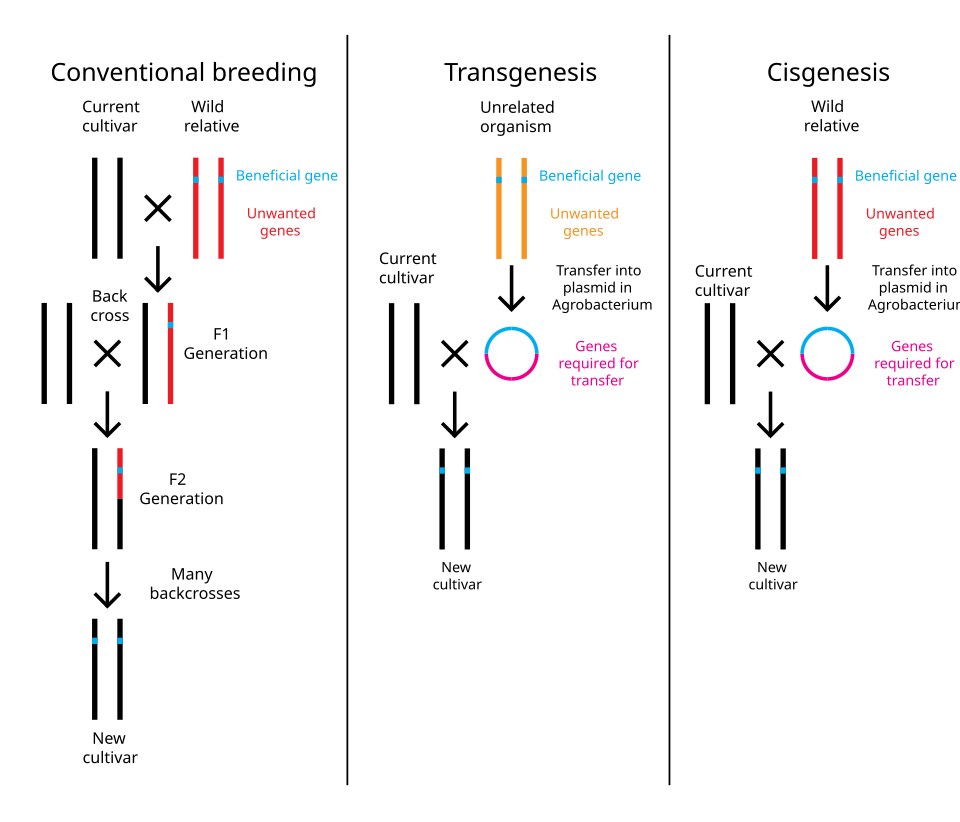
Conventional breeding vs. genetic engineering
| 🌾 Traditional selective breeding | 🧬 Genetic Engineering (GMO) |
|---|---|
| ◆ hybridization between the same or closely related species ◆ Thousands of genes are transcribed simultaneously (including unwanted ones) ◆ It takes generations and years to see results. ◆ Can also occur naturally in nature | ◆ Gene transfer from any species—even from bacteria to plants—is possible ◆ Only one or a few specific, selected genes are transferred ◆ Results are achieved relatively quickly ◆ Does not occur naturally in nature—completely man-made |
💡 Transgenesis vs. Cisgenesis — A Fine Difference: Transgenesis involves taking a gene from a completely unrelated organism (such as inserting a bacterium's Bt gene into cotton). Cisgenesis involves taking a gene from a wild/closely related plant of the same species—meaning that the gene could theoretically be transferred through conventional breeding, but the process is made faster and more precise. This distinction is considered important in ethical debates—some experts consider cisgenic crops less controversial than transgenic crops.
◆ GMO ◆ selective breeding ◆ Transgenesis ◆ cisgenesis ◆ transgene ◆ Crossing the species boundary
2 Global GMO landscape — history and current status
Global cultivation of GM crops has steadily increased since the Flavr Savr tomato was introduced to the market in 1994. In 1996, only 1.7 million hectares of land worldwide were under GM crops, but today this figure has grown to over 190 million hectares—a more than a hundredfold increase in just three decades.
Major countries cultivating GM crops in the world (darker colour = larger area) – USA, Brazil, Argentina, Canada, India and China are the major producers.
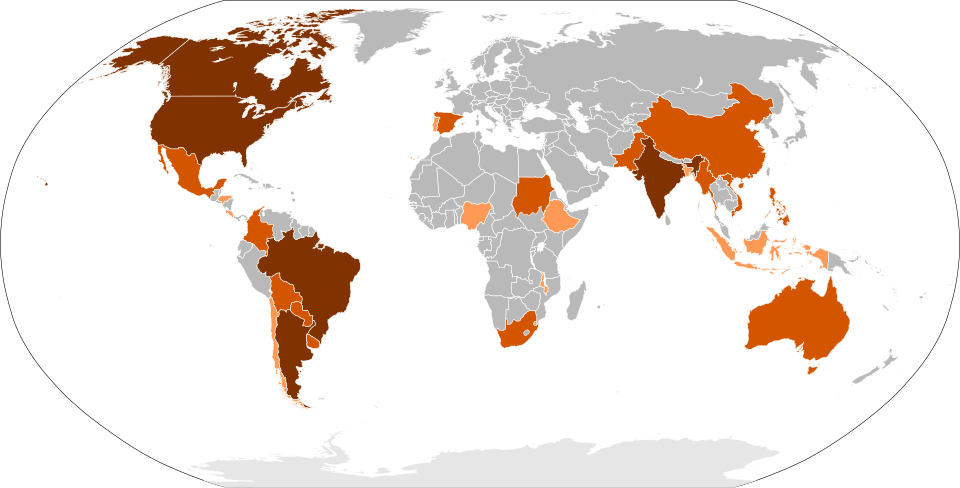
Major GM producing countries and major crops
- The US, Brazil, and Argentina—these three countries have approximately 80% of the world's GM cropland; primarily GM soybeans, corn, and cotton.
- India – among the world's major GM-producing economies, but only one crop – Bt cotton – has commercial approval.
- European Union — the region most cautious about GMOs; most member states either ban or very limitedly permit the cultivation of GM crops.
The global expansion of GM crops is largely limited to four crops—soybeans, corn, cotton, and canola (the mustard family)—which account for approximately 99% of the total GM acreage. This means that of the thousands of food crops grown worldwide, very few have received commercial GM approval, highlighting the difficulty and lengthy process of regulatory approval.
◆ Global GM area ◆ GM Soybeans ◆ GM maize ◆ GM cotton ◆ GM Canola ◆ European Union sanctions
3 Benefits of GMOs – Agricultural productivity and food security
The strongest argument of GMO proponents is that productivity-enhancing technologies are essential to feed a growing world population (estimated at 9.7 billion by 2050), amid the challenges of limited agricultural land and climate change. The example of Bt cotton (detailed in Chapter 10) has already shown how insect-resistant GM crops can directly benefit farmers by increasing yields and reducing pesticide costs.
| Category of benefits | Description |
|---|---|
| Yield increase | Reduced crop damage due to insect and disease resistance, increased production per hectare |
| Reduction in pesticide use | The need for chemical pesticide spraying is significantly reduced in Bt crops. |
| Climate tolerance | Development of drought-tolerant, flood-tolerant and salinity-tolerant GM varieties |
| weed control | Easier weed management in herbicide-tolerant crops |
| Farmer income | Improved net income by reducing production costs and increasing yields (proven in Bt cotton studies) |
💡 Climate-tolerant crops – the need of the future: Scientists are developing GM crops that can survive in less water (drought-tolerant), grow in saltier soils (salinity-tolerant), or even survive floods—such as flood-tolerant rice containing the "Sub-1" gene developed for flood-prone areas of Bangladesh and India (this is an example of gene-marker-based breeding, not a full transgenic one). Such technologies are considered crucial for food security in the era of climate change.
◆ Yield increase ◆ Reduction in pesticide use ◆ Drought-tolerant crops ◆ Herbicide-tolerant crops ◆ Food Security
4 Benefits of GMOs – Nutrition Enhancement (Golden Rice and Bio-Fortification)
Biofortification is a strategy that increases the nutrient content of crops, either naturally or through genetic engineering, to address malnutrition (especially micronutrient deficiencies) from a standard diet—it is particularly useful in areas where dietary diversity is limited.
🖼️ Golden rice (right, yellow grains) compared to regular white rice (left) — the golden color is due to beta-carotene
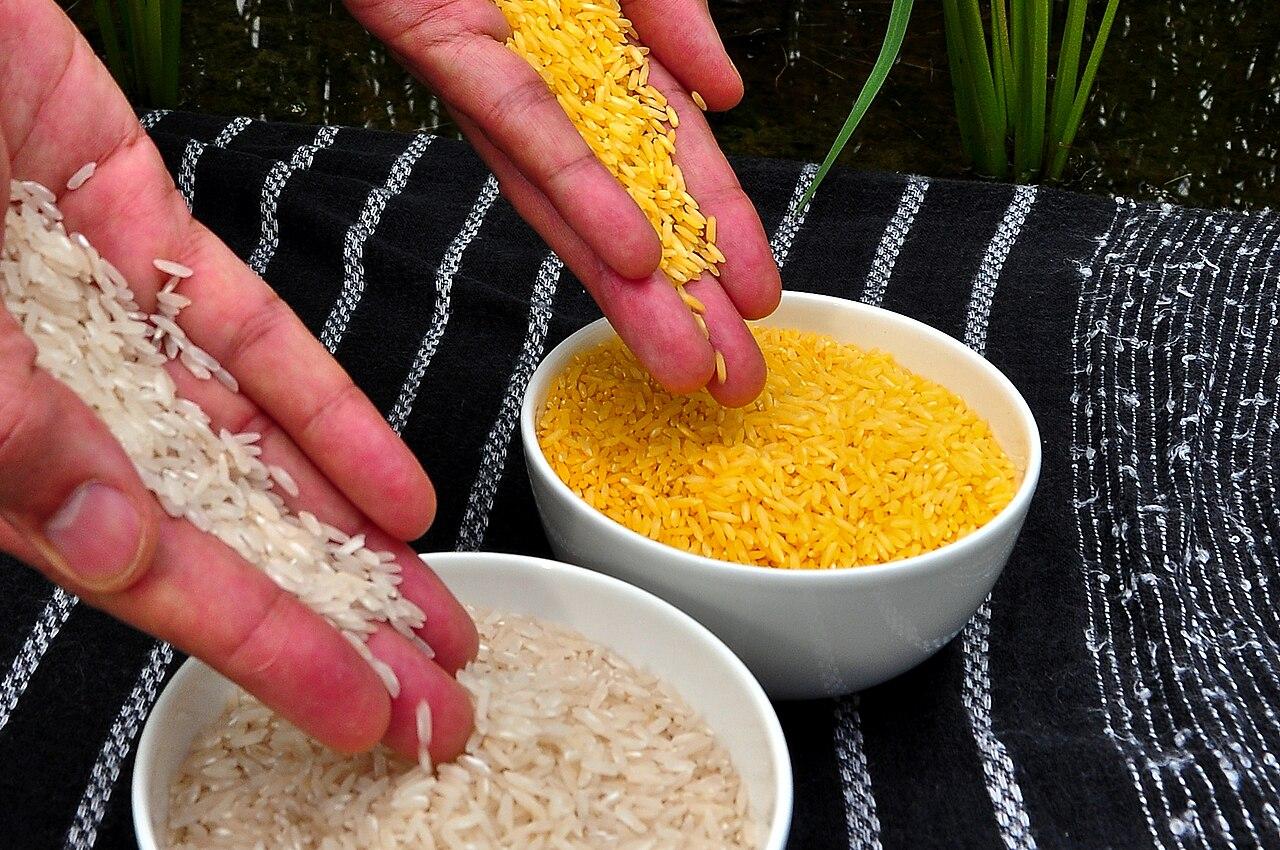
Maize and soil bacteria in Golden RiceErwinia uredovoraBy inserting the gene for beta-carotene into rice grains, the synthesis of beta-carotene (a precursor to vitamin A) has been carried out. Golden Rice was developed as a potential solution in Southeast Asia, where white rice is a staple diet and vitamin A deficiency causes blindness to millions of children each year.
- In 2021, the Philippines became the first country in the world to allow the commercial cultivation of golden rice, releasing it under the name 'Malusog Rice' (meaning 'healthy rice').
- In 2024, the Philippines Court of Appeals, following a petition from environmental and farmers' organizations, revoked the biosafety permits for Golden Rice and Bt eggplant—leaving their commercial future uncertain.
- Other biofortification examples: Iron-rich millet (from conventional breeding, non-GM), zinc-rich wheat, vitamin A-rich 'orange' sweet potato.
◆ Biofortification ◆ Golden Rice ◆ beta carotene ◆ Vitamin A deficiency ◆ Malusog Rice ◆ Philippines court decision 2024
5 Biosecurity concerns—impacts on the ecosystem
Biosafety refers to assessing and managing the potential negative impacts of GMOs on the environment and biodiversity. Before any GM crop can be commercially approved, scientists must ensure that it does not harm natural ecosystems.
Major biosecurity concerns
- Gene Flow: Transgenes from a GM crop can be transferred through pollination to nearby wild related species or non-GM crops, leading to the risk of a 'super-weed' (highly resistant weed).
- Effects on non-target organisms: The Cry protein in Bt crops is designed to kill only the targeted pest, but ecologists are concerned about its long-term effects on friendly insects (such as bees, butterflies, ladybird beetles).
- Loss of biodiversity: If a few high-yielding GM varieties are widely cultivated, traditional landraces may decline, leading to a narrowing of crop genetic diversity—this is why gene banks (see Chapter 10) become important.
- Development of insect resistance: The risk of insect populations developing resistance due to continued exposure to the same Bt protein—this is slowed by the refugia strategy (see Chapter 10).
💡 Precaution vs. Evidence – The Precautionary Principle: Biosafety policies often adopt the "Precautionary Principle"—that is, until the complete safety of a new technology is scientifically proven, it should be adopted in a limited/controlled manner, erring on the side of caution. The European Union's GMO policy is based on this principle, while countries like the US adopt a more liberal approach of "permission pending solid scientific evidence"—a distinction that is at the heart of the global GMO policy debate.
◆ Biosecurity ◆ gene flow ◆ Super-weed ◆ Non-target organisms ◆ biodiversity loss ◆ Precautionary Principle
6 Health Risk Concerns and Scientific Consensus
Whenever a new GM food product is about to hit the market, one of the first questions consumers have is – ‘Is it safe to eat?’ This is a completely natural and valid concern, and one that has been thoroughly studied by the scientific community.
The world's leading scientific bodies, including the World Health Organization (WHO), the US National Academy of Sciences, and the European Food Safety Authority (EFSA), have reviewed hundreds of studies and concluded that approved GM foods currently on the market are as safe as non-GM foods – there is no convincing scientific evidence of any specific health risks from their consumption.
Still, concerns persist
- Potential for allergies: Inserting a new gene could result in a new, unknown allergenic protein being created in the crop—so allergy-testing is mandatory for every GM product.
- Antibiotic-resistant marker genes: There is a theoretical concern that antibiotic-resistant marker genes (see Chapter 10) used in early GM techniques could be transferred to human gut bacteria—although there is no evidence of this, safer markers are used in newer techniques.
- Call for long-term studies: Some critics argue that studies of the 20-30 year long-term effects of GM foods on human health are currently insufficient, because the technology itself is relatively new.
Mandatory safety testing for every GM product: Before any GM crop is approved for commercial use, it must undergo toxicology testing, allergenicity assessment, nutrient equivalence (substantial equivalence—comparing the nutritional composition of a GM product with that of a non-GM version), and animal feeding studies. In India, this responsibility rests with the GEAC and related scientific committees (detailed in Topic 11).
◆ Scientific consensus ◆ WHO ◆ EFSA ◆ allergy testing ◆ Antibiotic resistance marker genes ◆ Substantial Equivalence ◆ toxicology testing
7 Socio-economic issues – seed sovereignty and farmer dependence
An important dimension of the GMO debate goes beyond pure science and involves economics and social justice—especially from the perspective of small and marginal farmers. Most commercial GM seeds are patent-protected by a few large multinational companies, which can impact farmers' traditional seed independence.
Major socio-economic concerns
- Seed Dependency: Patent-protected GM seeds cannot be preserved and re-sown by farmers for the next crop (as per the company's terms) – forcing them to purchase new seeds from the company each season, unlike the traditional 'seed saving' practice.
- Higher seed and input costs: GM seeds are generally more expensive than conventional seeds, and in some cases are sold 'bundled' with special herbicides/fertilizers – which can increase financial pressure on small farmers.
- Concerns about market monopoly: With a handful of large companies controlling a large portion of the global commercial seed market, there are concerns about their increasing dominance over pricing and availability.
- Terminator Technology Controversy: In the 1990s, a technology was developed that rendered seeds "sterile"—meaning the next generation of seeds would not germinate, forcing farmers to purchase new seeds each time. Due to global opposition, it was never commercially released, but it became a symbolic issue of anti-GMO sentiment.
🖼️ A public demonstration against GMO seed companies (Stockholm, Sweden) — global concerns about seed sovereignty and corporate control

◆ Seed Sovereignty ◆ Patent-protected seeds ◆ Seed dependence ◆ Terminator technology ◆ Market monopoly
8 Ethical Issues – Interference with Nature and Cultural Perspectives
The debate on GMOs is not limited to science or economics – it also involves deep ethical and philosophical questions that do not have a single 'correct' scientific answer, but depend on the values and beliefs of society.
The main aspects of the ethical debate
- Concerns about 'tampering with nature': Some believe that transferring genes across the natural boundaries of species is ethically unjustified—it is considered an unwarranted interference with the 'original form of nature'.
- Religious and cultural perspectives: Some religious/cultural communities have particular sensitivities regarding the species purity of organisms (e.g., vegetarianism objects to plants containing animal genes)—for example, if a vegetable has been injected with a fish or bacterial gene, some communities may consider it contrary to their dietary principles.
- Intergenerational Justice: Since the long-term ecological effects of GMOs are uncertain, the question arises as to how much moral right the current generation has to make such irreversible decisions for future generations.
- Informed Consent: Consumers have the right to know and choose what they eat—this principle forms the ethical basis for labeling requirements (detailed in the next topic).
| ✅ Arguments of GMO supporters | ⚠️ Arguments from GMO Critics |
|---|---|
| ◆ Humanity has always adapted nature to its needs (since the beginning of agriculture). ◆ Tackling hunger and malnutrition is also a moral obligation. ◆ Approval is granted only after rigorous scientific testing | ◆ Risk assessment difficult due to speed and accuracy ◆ Fears of increased corporate control and inequality ◆ The right to 'natural' food and cultural values must be protected. |
◆ Ethical debate ◆ Intervention in nature ◆ Religio-cultural perspective ◆ Intergenerational justice ◆ informed consent
9 GMO Labeling and Consumers' Right to Know
Should a product contain GM ingredients? This question has been a major challenge for policymakers worldwide, balancing the consumer's "right to know" with industry's concern about not spreading unnecessary fear.
| country area | GMO Labeling Policy |
|---|---|
| European Union | Mandatory labelling – any product containing more than 0.9% GM ingredients must have a clear label |
| India (FSSAI) | 1% limit set for imported GM food; draft rules for GM food regulation under process |
| America | National Bioengineered Food Disclosure Standard — QR code/text label option |
| China | Mandatory labelling – clear marking required for listed GM products |
In India, the Food Safety and Standards Authority of India (FSSAI) has proposed separate regulations for GM foods, setting a limit (1%) on GM content in imported foods. However, the only approved GM crop grown in India (Bt cotton) is a non-food (fiber) crop, so the issue of domestic GM food labeling is currently limited in scope—but is particularly relevant for imported processed foods (such as soy and corn products).
◆ GMO labeling ◆ right to know ◆ FSSAI ◆ National Bioengineered Food Disclosure Standard
10 International Regulations – Cartagena Protocol and Codex Alimentarius
Because GM crops and seeds are traded across international borders, the need for globally coordinated regulations has emerged. Two major international frameworks have been developed to this end.
Cartagena Protocol on Biosafety, 2000
This protocol, adopted in 2000 under the Convention on Biological Diversity (CBD) and entered into force in 2003, regulates the safe transboundary movement, management, and use of Living Modified Organisms (LMOs). Its fundamental principle is 'Advance Informed Agreement'—that is, any country exporting LMOs to another country is obliged to obtain the explicit consent of the importing country. India is a signatory and ratifying member of this protocol.
Codex Alimentarius
It is an international food standards code jointly established by the Food and Agriculture Organization (FAO) and the World Health Organization (WHO) that provides scientific guidelines for the safety testing and risk assessment of GM foods. It also serves as a reference point in food safety disputes at the World Trade Organization (WTO).
💡 Advance Informed Consent Principle — Practical Example: If a country wishes to export GM maize seed to another country, under the Cartagena Protocol, the exporting country must first provide the importing country with complete information (including a risk assessment) about the GM product and obtain the importer's explicit written consent—only then will the import be considered legal. This principle is considered particularly important for protecting the interests of developing countries.
◆ Cartagena Protocol ◆ Convention on Biological Diversity (CBD) ◆ LMO ◆ Advance informed consent ◆ Codex Alimentarius ◆ FAO-WHO
11 GMO regulatory framework in India — GEAC, RCGM, IBSC
India has established a multi-tier regulatory system for research, testing, and commercial approval of GMOs under the Environment (Protection) Act, 1986. This system ensures step-by-step monitoring from the laboratory level to the national approval level.
📐 India's Multi-Layered GMO Regulatory Structure – Formula/Process: Level 1: Institutional Biosafety Committee (IBSC) — at each research institute/university level Level 2: Review Committee on Genetic Manipulation (RCGM) — under the Department of Biotechnology (DBT) Level 3: Genetic Engineering Appraisal Committee (GEAC) — under the Ministry of Environment (MoEFCC) — final approval authority
| regulatory body | Responsibility |
|---|---|
| IBSC (Institutional Biosafety Committee) | Preliminary monitoring of all GMO research activities at the institute level and ensuring compliance with national guidelines |
| RCGM (Review Committee on Genetic Manipulation) | Under DBT – Review and Monitoring of Research Proposals, Laboratory and Limited Field Trials |
| GEAC (Genetic Engineering Appraisal Committee) | Under MoEFCC – apex body for large scale field trials, environmental release and final approval for commercial cultivation |
Categories of experiments
- Category I: Low-risk laboratory experiments — Exempt from prior approval, only notification to IBSC is sufficient.
- Category II: Moderate-risk use — notification to IBSC mandatory, RCGM monitoring.
- Category-III: High-risk use/large-scale use/environmental release – Prior approval from both RCGM and GEAC is mandatory.
The GEAC's decision is not considered final—the Environment Minister has the authority to accept or reject the GEAC's recommendation, as happened in the case of Bt brinjal in 2010 (detailed in the next topic). Additionally, state governments also have the authority to allow or deny GM crop trials in their areas.
◆ Environment Protection Act 1986 ◆ IBSC ◆ RCGM ◆ GEAC ◆ MoEFCC ◆ Category I/II/III experiments
12 Major GMO controversies in India – Bt brinjal moratorium and GM mustard case
Bt Brinjal Moratorium
In October 2009, the GEAC approved the commercial cultivation of Bt brinjal—which would have been India's first GM food crop. However, in the face of strong opposition from farmers' organizations, environmental activists, and some scientists, public consultations, and scientific disagreement, the then Environment Minister, Shri Jairam Ramesh, overturned the GEAC's decision in February 2010 and imposed an indefinite moratorium on Bt brinjal—effective until today (2025). This moratorium will remain in place until independent scientific studies prove its safety to the satisfaction of the public and the scientific community.
GM mustard (DMH-11) controversy
Dhara Mustard Hybrid-11 (DMH-11) is an indigenous herbicide-tolerant (herbicide-tolerant) variety jointly developed by the Centre for Genetic Manipulation (CGMCP), University of Delhi, National Dairy Development Board (NDDB) and DBT.barnase-barstartechnology-based) transgenic mustard hybrid, aimed at reducing India's dependence on edible oil imports—India imports about 55-60% of its edible oil requirement, with increasing mustard production a strategic priority.
- In 2022, the Central Government gave conditional approval for the environmental release of DMH-11, which was challenged in the Supreme Court.
- A two-judge bench of the Supreme Court delivered a split verdict on the matter – due to which the case has now been referred to a larger three-judge bench.
- Current status (2026): The case is pending before a larger bench; the central government has assured the court that commercial farming will not be implemented while the case is pending—so commercial farming is currently on hold.
- This issue is of particular importance for major mustard-producing states like Rajasthan—Rajasthan is India's largest mustard-producing state, so the GM mustard policy will directly impact millions of farmers here.
| ✅ GM mustard supporters' argument | GM mustard critics argue |
|---|---|
| ◆ Strategic need to reduce edible oil import dependence ◆ Indigenous technology – no dependence on foreign companies ◆ Potential improvement in farmer income due to increased yield | ◆ Concerns about the impact of herbicide-tolerance on bees and pollinators ◆ Allegations of inadequacy of independent long-term studies ◆ Demand for transparency of public data |
◆ Bt Brinjal Moratorium ◆ Jairam Ramesh ◆ DMH-11 ◆ CGMCP ◆ NDDB ◆ Barnase-Barstar technique ◆ Supreme Court split decision ◆ Mustard production in Rajasthan
13 Intellectual Property Rights and Seed Patent Disputes
Intellectual Property Rights (IPR) is a crucial legal dimension of the GMO debate – because developing GM seeds requires years of research and substantial capital investment, companies resort to patents to protect their investments, but this raises serious questions about farmers' traditional freedoms.
India's Protection of Plant Varieties and Farmers' Rights Act, 2001
India, in fulfilling its obligations under the TRIPS Agreement of the International Trade Organization (WTO), enacted a unique law in the world – the Protection of Plant Varieties and Farmers' Rights Act, 2001. This law serves two purposes simultaneously – protecting the innovations of plant breeders, while also protecting the traditional rights of farmers.
- Farmers' Rights: The law explicitly gives farmers the right to preserve, re-sow, and exchange seeds of any variety (even protected/patented varieties) grown on their farms – only selling in 'branded' form is prohibited.
- Breeders' Rights: Exclusive commercial rights to newly developed plant varieties for a fixed period (usually 15–18 years), to encourage investment in research.
In many parts of the world, there have been lengthy legal disputes between multinational seed companies and farmers over patent infringement – with farmers accusing the former of using patent-protected seeds without permission, while the latter argue that the genes were inadvertently passed to their crops through pollination. Such cases have fueled a global debate about the appropriateness of patent law's application to living, self-reproducing organisms (such as seeds) – because plants are of a very different nature from traditional industrial products (such as machines).
◆ Intellectual Property Rights (IPR) ◆ TRIPS Agreement ◆ Protection of Plant Varieties and Farmers' Rights Act 2001 ◆ Farmers' Rights ◆ reproductive rights ◆ Seed patent dispute
14 The Way Forward – A Balanced and Responsible Approach
In this chapter, we've seen that GMOs aren't a simple "good versus bad" issue—it lies at the complex intersection of science, economics, ethics, law, and culture. As a responsible citizen and future administrator, it's essential to adopt a balanced approach—neither blind opposition nor blind acceptance without caution.
Essential pillars of a balanced policy
- Case-by-case Assessment: Every GM product is different – its risk-benefit analysis should be done individually, rather than weighing all GMOs on the same scale.
- Independent, transparent scientific evaluation: Regulatory decisions should be based on data from independent, conflict-of-interest scientific committees, rather than political pressure, and that data should be made publicly available.
- Farmer-centric policy: Appropriate price-control and seed-access policies are essential to ensure that the benefits of any GM technology ultimately reach small and marginal farmers, not just large companies.
- Consumer autonomy: Consumers should be empowered to make informed choices through clear labelling.
- Investment in alternative technologies: Alongside GM, parallel investment should continue in organic farming, conventional breeding, Marker-Assisted Selection (which is not GM) and other sustainable agricultural technologies to ensure a variety of options are available.
The ELSI (Ethical-Legal-Social Issues) aspect of GMOs is often asked in exams in connection with broader topics like 'Sustainable Development and Environmental Policy' or 'Science-Technology and Society' – while writing answers, presenting both sides (benefits and concerns) in a balanced manner and citing concrete examples from India (Bt cotton, Bt brinjal moratorium, GM mustard) enhances the quality of the answer.
◆ Balanced approach ◆ Case-by-Case Evaluation ◆ Farmer-centric policy ◆ consumer autonomy ◆ Marker-assisted selection
• A GMO is an organism whose DNA has been deliberately altered by genetic engineering – a technique more rapid and precise than traditional selective breeding, but more controversial because it crosses species boundaries. • Global GM crop area has exceeded 190 million hectares, but it is mainly limited to four crops (soybean, maize, cotton, canola). • The benefits of GMOs include increased yields, reduced pesticide use, climate tolerance, and biofortification technologies like Golden Rice — which can help fight malnutrition. • Biosafety concerns include gene flow, effects on non-target organisms, and biodiversity loss; scientific consensus suggests that approved GM foods are as safe as non-GM ones, but long-term studies are still required. • Socio-economic issues include concerns about seed sovereignty, patent-dependence, and market monopoly; ethical debates include questions of interference with nature, cultural values, and intergenerational justice. • The Cartagena Protocol (2000) regulates the transboundary movement of LMOs through the principle of 'advance informed consent'; the Codex Alimentarius provides global food safety standards. • India has a three-tier regulatory framework (IBSC → RCGM → GEAC) under the Environment Protection Act 1986; the GEAC's recommendation can be overturned by the Environment Minister. • Bt brinjal has been under an indefinite moratorium since 2010; the GM mustard (DMH-11) case is currently pending before a larger bench of the Supreme Court—both are India's biggest GMO controversies. • India's Protection of Plant Varieties and Farmers' Rights Act, 2001 is a unique law that balances both the seed-saving rights of farmers and the commercial rights of breeders. • A balanced approach to GMO policy is essential—based on the pillars of case-by-case assessment, independent scientific monitoring, farmer-centric policy, and consumer autonomy.