- Introduction to Biotechnology – Definition, History and Major Milestones
- Gene Cloning and Gene Banks – Basic Concepts
- Tools of genetic engineering—restriction enzymes, vectors, DNA ligase
- Recombinant DNA Technology – Step-by-Step Process
- Polymerase chain reaction (PCR) and DNA fingerprinting
- Medical applications of genetic engineering—insulin, growth hormone, and other recombinant proteins
- Applications in agriculture — Bt crops
- Transgenic plants and animals
- gene therapy
- Bioremediation and biopesticides
- Industrial biotechnology—enzyme, antibiotic, and vitamin production
- India's Bio-Economy and DBT/BIRAC Policies
- Stem cell research and regulation in India
- Biotechnology in Rajasthan
One morning in 1978, scientists in the laboratory of Genentech, a small American company, conducted a remarkable experiment—they cut out the human insulin-producing gene and inserted it into the DNA of a simple intestinal bacterium, E. coli. Within hours, the bacterium began producing human insulin—exactly the same as the one produced in our pancreas. Previously, diabetics had to administer insulin extracted from pig or cow pancreas, which was expensive and often rejected by the body. In 1982, this "human insulin" (Humulin) came to market as the world's first genetically engineered drug. This event marked a turning point in the history of biology—for the first time, humans deliberately altered an organism's DNA to suit their needs. This is the power of biotechnology and genetic engineering—to read, cut, join, and reprogram the most fundamental code of life, DNA. Let's understand this exciting science in detail.
1 Introduction to Biotechnology – Definition, History and Major Milestones
The story of human insulin illustrates what biotechnology really is—the use of living organisms, their cells, or their parts (such as enzymes, proteins) to develop products or processes that are useful to human life. According to the European Federation of Biotechnology, "Biotechnology is the integrated use of microorganisms, cell and tissue culture techniques, and the engineering and technological applications of biological processes to fully utilize the potential of science in the production of goods and services." Simply put—biotechnology is the art and science of controlling the biological capabilities that nature has endowed living organisms with (such as fermentation, protein synthesis, nitrogen fixation) for human well-being.
| 🏺 Traditional Biotechnology | 🧬 Modern Biotechnology |
|---|---|
| ◆ For thousands of years – without any genetic modifications ◆ Making yogurt, cheese, bread, wine, vinegar ◆ Traditional selective breeding of plants and animals ◆ Making compost and organic fertilizers ◆ Example: Making wine and bread in Egypt 6000 years ago | ◆ Since the late 20th century – work directly at the DNA/gene level ◆ Recombinant DNA (rDNA) technology—gene cutting and joining ◆ Gene editing (CRISPR), tissue culture, stem cell technology ◆ Monoclonal antibodies, PCR, DNA fingerprinting ◆ Examples: Human insulin, Bt cotton, COVID mRNA vaccines |
Major milestones in history
| Year | Scientist/Event | Contribution |
|---|---|---|
| 1857 | Louis Pasteur | Proved that fermentation occurs by the action of microorganisms |
| 1928 | Alexander Fleming | Accidental discovery of penicillin (the first antibiotic) |
| 1943 | Selman Waxman | Discovery of streptomycin; coining the term 'antibiotic' |
| 1953 | James Watson and Francis Crick | Derivation of the double helix structure of DNA |
| 1972 | Paul Berg | The first artificial recombinant DNA molecule was prepared |
| 1973 | Stanley Cohen and Herbert Boyer | The first successful gene cloning experiment—the foundation of rDNA technology |
| 1978 | Genentech Company (USA) | The human insulin gene was cloned into E. coli bacteria. |
| 1982 | Humulin | The first recombinant DNA-based drug is launched. |
| 1990 | Human Genome Project | Global project launched to read the entire human DNA sequence |
| 1994 | Flavor Saver Tomatoes | The first commercial genetically modified (GM) food product |
| 1996 | Dolly the Sheep | The first mammal cloned from an adult cell |
| 2003 | Human Genome Project Complete | Mapping of nearly all of the human 20,000–25,000 genes |
| 2012 | CRISPR-Cas9 technology | Jennifer Doudna and Emmanuelle Charpentier – The Precision Gene-Editing Revolution |
| 2025 | Genome India project completed | Genomes of 10,000 individuals from India sequenced |
💡 Human insulin—the first major breakthrough in biotechnology: Before 1978, diabetics had to use insulin extracted from pig and cow pancreas—it was expensive and caused allergic reactions in some patients. In 1978, by inserting the human insulin gene into the DNA of E. coli bacteria, scientists transformed the bacteria into an "insulin factory." In 1982, it came to market as the world's first recombinant DNA drug and today serves as a lifeline for millions of diabetics worldwide.
Major Branches of Biotechnology (Color-Based Classification)
- Red Biotechnology: Medical and health sector – vaccines, antibiotics, gene therapy.
- Green Biotechnology: Agriculture sector – Bt crops, biofertilizers, disease-resistant plants.
- White Biotechnology: Industrial areas—enzymes, biofuels, biodegradable plastics.
- Blue Biotechnology: Obtaining new compounds and medicines from marine organisms.
◆ Biotechnology ◆ Traditional vs. Modern Biotechnology ◆ Louis Pasteur ◆ penicillin ◆ DNA Bi-coil ◆ Recombinant DNA ◆ Human insulin ◆ Humulin ◆ CRISPR-Cas9 ◆ Red/Green/White/Blue Biotechnology
2 Gene cloning and gene banks
The word 'clone' is derived from the Greek word 'klon' meaning 'twig' or 'branch' – a new branch growing from the parent plant, exactly like the original. In biology, a clone refers to an offspring that is genetically identical to its parent. Gene cloning involves creating multiple exact copies of a particular gene (a piece of DNA) in a laboratory, so that that gene can be studied or transferred to another organism to create a useful product. Remember – gene cloning and 'organism cloning' (such as Dolly the sheep) are two different things.
| 🧬 Gene Cloning | Reproductive Cloning |
|---|---|
| ◆ Making multiple copies of a single gene/DNA segment ◆ Using a bacterium or cell as a 'copy machine' ◆ Purpose: Protein production, research, diagnosis ◆ Example: cloning of the insulin gene | ◆ creating an exact genetic replica of an entire organism ◆ transplantation of the nucleus of an adult cell into an unfertilized egg ◆ Purpose: Threatened species conservation, research ◆ Example: Dolly the sheep (1996, Scotland) — the first mammal cloned from an adult breast cell |
Gene Bank
A gene bank is a facility where seeds, tissue, DNA, or genetic material from various organisms (mainly plant varieties and wild relatives) are preserved for long periods at extremely low temperatures (usually -18°C or below) for future use in biodiversity conservation, breeding programs, and food security. It is a form of 'genetic insurance'—a crop variety's genetic source remains intact even if it becomes extinct due to climate change, disease outbreak, or natural disaster.
- National Bureau of Plant Genetic Resources (NBPGR), New Delhi — India's national gene bank, preserving more than 4.7 lakh plant genetic samples.
- Svalbard Global Seed Vault, Norway — The world's largest 'doomsday' seed repository, located beneath the Arctic ice.
- Rajasthan agricultural universities (such as Swami Keshwanand Rajasthan Agricultural University, Bikaner) also have gene banks for regional crop varieties—such as the community gene bank of native fennel varieties of Sirohi (details in Chapter 15).
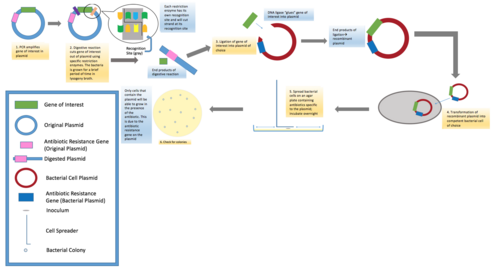
🖼️ Main steps of gene cloning – selection of gene, cutting with restriction enzyme, insertion into plasmid, transfer into bacterial cell and selection
💡 Dolly the Sheep – a landmark example of animal cloning: In 1996, scientists led by Ian Wilmut at the Roslin Institute in Scotland extracted the nucleus from an adult sheep's mammary gland cell and transplanted it into an unfertilized egg (which had its own nucleus removed) from another sheep. This technique was called somatic cell nuclear transfer. The resulting sheep, Dolly, was a genetically identical copy of her original donor sheep—proving that even an adult, unspecialized cell could be reprogrammed to an embryonic state.
◆ gene cloning ◆ Organism/Reproductive Cloning ◆ Somatic Cell Nuclear Transfer ◆ Dolly the Sheep ◆ Gene Bank ◆ NBPGR ◆ Svalbard Seed Vault ◆ Genetic insurance
3 Tools of genetic engineering – restriction enzymes, vectors, DNA ligase
Imagine DNA as a very long strand, with thousands of useful 'words' (genes) linked together. Genetic engineering requires scientists to cut a specific word at the exact spot on this strand, add it to another strand, and then permanently strengthen that link. This requires three main 'tools'—'molecular scissors' (restriction enzymes), a 'vehicle' to deliver the gene to the new cell (vector), and 'molecular glue' (DNA ligase) to make the link permanent.
(A) Restriction enzymes – molecular scissors
Restriction enzymes (Restriction Endonuclease) are specialized enzymes that recognize and cut DNA molecules at a specific, predetermined sequence—much like a sewing machine cuts fabric only along a marked line. They are originally found in bacteria, where they protect the bacteria from virus attack by cutting and destroying the virus's DNA. The most well-known restriction enzymesEcoRIwhich is E. coli (Escherichia coli) is derived from bacteria and recognizes and cuts the DNA sequence GAATTC.
- Sticky Ends: Many restriction enzymes cut DNA in an asymmetric manner, creating single-strand protruding ends—these 'sticky ends' are able to bind to any other DNA fragment if the ends are complementary.
- Blunt Ends: Some enzymes cut DNA completely straight across, leaving no bulge.
- Restriction enzyme nomenclature: The first letter is from the genus, the next two letters are from the species—e.g., in EcoRI, 'E' = Escherichia, 'co' = coli, 'R' = RY13 strain, 'I' = first enzyme discovered.
(B) Vectors
A vector is a 'vehicle' that carries the cut gene (attached to the plasmid) into a host cell (such as a bacterium) and maintains it there stably, allowing it to replicate as the cell divides.
| Type of vector | Speciality |
|---|---|
| Plasmid | A small, circular, self-replicating DNA molecule found in bacterial cells; the most common vector; example pBR322 |
| Bacteriophage | Virus that infects bacteria; can carry large DNA fragments (up to ~20 kb) |
| Cosmid | Combining the properties of plasmids and phages; capable of carrying even larger DNA fragments |
| artificial chromosomes (BAC/YAC) | Bacterial/yeast artificial chromosomes; carrying very large DNA fragments (hundreds of kb)—used in the Human Genome Project |
(C) DNA ligase – molecular glue
DNA ligase is an enzyme that permanently joins the ends of cut DNA fragments by forming a phosphodiester bond—much like tying a knot between the two ends of a broken strand. The most commonly used ligasesT4 DNA ligasewhich is derived from T4 bacteriophage.
💡 Everyday Analogy – Scissors, Glue, and the Postman: The simplest way to understand genetic engineering is to think of restriction enzymes as 'scissors' that cut genes at the right place, DNA ligase as 'glue' that sticks the cut piece to a new place, and vector as the 'postman' that delivers this joined package (recombinant DNA) to the host cell.
◆ Restriction enzyme ◆ EcoRI ◆ Sticky Ends ◆ Blunt Ends ◆ Vector ◆ plasmid ◆ bacteriophage ◆ Cosmids ◆ BAC/YAC ◆ DNA ligase ◆ T4 DNA ligase
4 Recombinant DNA Technology – Step-by-Step Process
Recombinant DNA (rDNA) is a DNA molecule created by artificially joining DNA segments from two different sources (such as human and bacterial) in the laboratory—that is, it does not occur naturally in nature, but is instead 'designed' by scientists. Using the three tools (restriction enzymes, vectors, DNA ligase) learned in the previous topic, the entire process occurs in the following well-organized steps.
📐 Recombinant DNA Technology – Formula/Process: Step 1: Identification of the Gene of Interest and DNA Extraction Step 2: Cutting both the desired gene and the plasmid at the same site using restriction enzymes Step 3: Insertion of the cut gene into the vector Step 4: Stabilization of the joint by DNA ligase → formation of recombinant DNA Step 5: Transfer of the recombinant DNA into a host cell (such as E. coli) (Transformation) Step 6: Selection and Screening — Identifying which cells successfully took up the recombinant DNA Step 7: Cloning and Mass Production (Multiplication and Protein Expression)
Detailed description of the steps
- Gene identification and extraction: First, the gene to be cloned (e.g., the human insulin gene) is identified and its pure DNA is extracted from the cell.
- Cutting: Both the desired gene and the carrier plasmid are cut with the same restriction enzyme (such as EcoRI) – this creates identical 'sticky ends' on both sides, which complement each other.
- Insertion: The cut gene fits into the open plasmid – complementary sticky ends form hydrogen bonds.
- Ligation: The DNA ligase enzyme makes this connection permanent by forming a phosphodiester bond—it is now a complete recombinant plasmid.
- Transformation: The recombinant plasmid is introduced into the host bacterial cell—usually by temporarily permeabilizing the cell membrane by calcium chloride treatment or heat-shock methods.
- Selection: Since not all bacterial cells take up the plasmid, only successful cells are allowed to survive in the antibiotic-containing medium using an antibiotic-resistant gene (marker gene) present in the plasmid.
- Cloning and Expression: Selected bacterial cells are cultured on a large scale in large bioreactors, where they produce large quantities of the desired protein (such as insulin).
Restriction enzymes and DNA ligases are sometimes collectively called the "molecular scissors and sewing machine"—this pair is the foundation of recombinant DNA technology. It was for this principle that Werner Arber, Daniel Nathans, and Hamilton Smith received the Nobel Prize in Medicine in 1978.
◆ Recombinant DNA ◆ Transformation ◆ Calcium chloride method ◆ Heat-shock ◆ Selection/Screening ◆ Antibiotic resistance marker genes ◆ Bioreactor
5 Polymerase Chain Reaction (PCR) and DNA Fingerprinting
In 1983, American scientist Kary Mullis was driving at night when an idea struck him: could a small piece of DNA be replicated repeatedly in a test tube to produce millions of copies, without the help of a living cell? This idea later developed into the Polymerase Chain Reaction (PCR), for which Mullis received the Nobel Prize in Chemistry in 1993. Today, modern biology is unimaginable without PCR—it's used everywhere from COVID-19 testing to crime investigations.
PCR process—three steps repeated over and over again
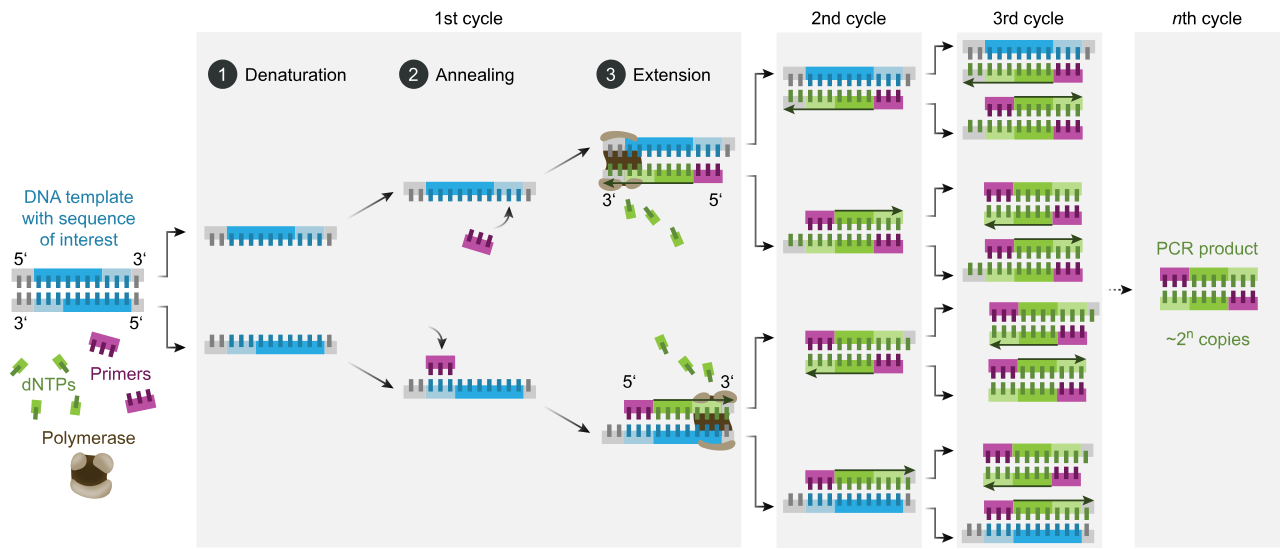
PCR works like a 'molecular photocopy machine,' doubling a specific segment of DNA in each cycle. A special heat-tolerant enzyme, Taq polymerase, is used, which is obtained from the hot spring bacterium Thermus aquaticus, and is not destroyed even at high temperatures.
- Denaturation (~95°C): The two strands of DNA are separated due to heat.
- Annealing (~50-65°C): Short primers are attached to both ends of the desired segment of DNA.
- Extension (~72°C): The Taq polymerase enzyme starts from the primer and forms a new complementary strand – thus doubling the amount of DNA.
This cycle is repeated 20–35 times—with each cycle doubling the amount of DNA, resulting in millions (2ⁿ) copies of a single fragment in just a few hours.
PCR cycles – denaturation, annealing, and extension, doubling the amount of DNA in each cycle
Applications of PCR
- RT-PCR testing (diagnosis) for infectious diseases including COVID-19.
- DNA amplification from even very small amounts (a single hair or drop of blood) in criminal investigations.
- Paternity/Maternity Testing and Genealogical Studies.
- Preparation of sufficient quantity of the desired gene before gene cloning.
DNA Fingerprinting/Profiling
Just as every person's fingerprint is unique, every person's DNA contains regions whose structure (repetition pattern) varies from person to person—these are called VNTRs (Variable Number Tandem Repeats). DNA fingerprinting uses these variations to establish a person's unique identity. This technique was invented in 1984 by British geneticist Alec Jeffreys.
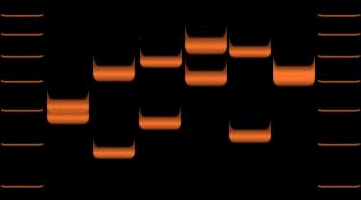
- Process: DNA extraction → shearing with restriction enzymes → separation by size by gel electrophoresis → marking with radioactive/fluorescent probes → obtaining band patterns (e.g. barcodes).
- In gel electrophoresis, DNA fragments move toward a positive electrode due to a negative charge in an electric field—small fragments move faster and larger fragments move slower, forming a characteristic band pattern.
unique band pattern (like a barcode) obtained by gel electrophoresis
In India, the Central Forensic Science Laboratories (CFSL) and the Hyderabad-based CDFD (Centre for DNA Fingerprinting and Diagnostics) routinely use DNA fingerprinting in crime investigations, identification of unidentified bodies in disasters, evidence in rape/murder cases, and settlement of paternity disputes. The reliability of DNA evidence is so high that it is often considered conclusive evidence in courts.
◆ PCR ◆ Kary Mullis ◆ Taq polymerase ◆ Deformation ◆ Annealing ◆ Expansion ◆ primer ◆ DNA fingerprinting ◆ Alec Jeffries ◆ VNTR ◆ gel electrophoresis ◆ CDFD Hyderabad
6 Medical applications of genetic engineering
Recombinant DNA technology has revolutionized medicine. Proteins and hormones that previously had to be extracted from human or animal tissue with great difficulty, high cost, and the risk of infection can now be produced safely, purified, and in unlimited quantities in the laboratory using bacteria or animal cells.
| Recombinant protein/drug | Use |
|---|---|
| Human insulin (Humulin, 1982) | In Treatment of Type 1 Diabetes |
| Human Growth Hormone (hGH) | Dwarfism and growth disorders |
| Erythropoietin | In the treatment of anemia in kidney patients |
| Interferons | Certain types of cancer and viral infections (hepatitis) |
| Interleukin-2 | To activate the immune system in cancer immunotherapy |
| Anticoagulant factors VIII and IX | In Treatment of Haemophilia |
| Tissue plasminogen activator (tPA) | To dissolve blood clots in heart attacks and strokes |
| monoclonal antibodies | In targeted cancer therapy and diagnostic trials |
| hepatitis B vaccine | The first recombinant DNA-based vaccine |
Of particular importance—the safety revolution in hemophilia therapy:In the 1980s, hemophilia patients were given anticoagulant factor (Factor VIII) extracted from human blood, which infected many patients with AIDS (HIV) and hepatitis. Now, it is produced in the laboratory by inserting the human Factor VIII gene into CHO cells (Chinese Hamster Ovary cells)—completely eliminating the risk of blood-borne infection.
◆ Human insulin ◆ growth hormone ◆ Erythropoietin ◆ Interferon ◆ Anticoagulant factor VIII/IX ◆ tPA ◆ monoclonal antibodies ◆ CHO cells ◆ hepatitis B vaccine
7 Applications in Agriculture – Bt Crops
A common bacterium found in soil is—Bacillus thuringiensis(Bt for short). This bacterium produces a special type of protein crystal (Cry protein) that destroys certain insects (such as bollworms) after reaching their intestines, but is completely safe for humans and other organisms. Scientists have developed a new method for thiscryThey began transferring the gene into the plant's DNA—causing the plant to produce the insecticidal protein itself. Today's Bt crops are based on this principle.
Bt cotton — India's most widespread GM crop
Bt cotton was commercially approved in India in 2002 and today covers over 95% of the country's total cotton acreage. It carries the cry1Ac and cry2Ab genes, which confer resistance to cotton's biggest enemies—the pink bollworm and the American bollworm. This has significantly reduced pesticide spraying and increased farmer yields and incomes.
- The Genetic Engineering Appraisal Committee (GEAC) is responsible for the approval and regulation of Bt crops in India (detailed discussion in Chapter 11).
- Other Bt crops (at research/trial stage): Bt maize, Bt eggplant (Bt Brinjal — commercial approval suspended in India), Bt tomato, Bt tobacco.
Scientists' concerns about Bt cotton
- Development of Bt-resistance in insects — There have been reports of some bollworm populations developing resistance to the Cry protein with continued use.
- Ecologists are concerned about the potential impact on non-target organisms such as butterflies and friendly insects.
- Refuge Strategy: Planting a 'refuge' of non-Bt crops alongside Bt crops is mandated to slow the development of resistance and maintain susceptible insect populations.
When a bollworm larva eats a Bt cotton leaf, the Cry protein reaches its intestine and becomes activated in the alkaline environment, binding to the cells of the intestinal wall and creating holes in them. This causes the insect's intestinal function to collapse, causing it to stop feeding and die within a few days. The human intestinal environment is acidic, and our cells have no receptor for the Cry protein, so it is harmless to humans.
◆ Bacillus thuringiensis ◆ Cry Protein ◆ Bt cotton ◆ Pink bollworm ◆ GEAC ◆ ✓ Brinjal ◆ Refugia strategy ◆ Non-target organisms
8 Transgenic plants and animals
A transgenic organism is a plant or animal whose DNA has been permanently implanted with one or more genes from another organism (even a completely different species) by artificially transferring them. These newly added genes are called transgenes. One of nature's own genetic engineers—soil bacteria—is used to transfer genes into plants.Agrobacterium tumefaciens।
(A) Transgenic plants – Agrobacterium/Ti plasmid method
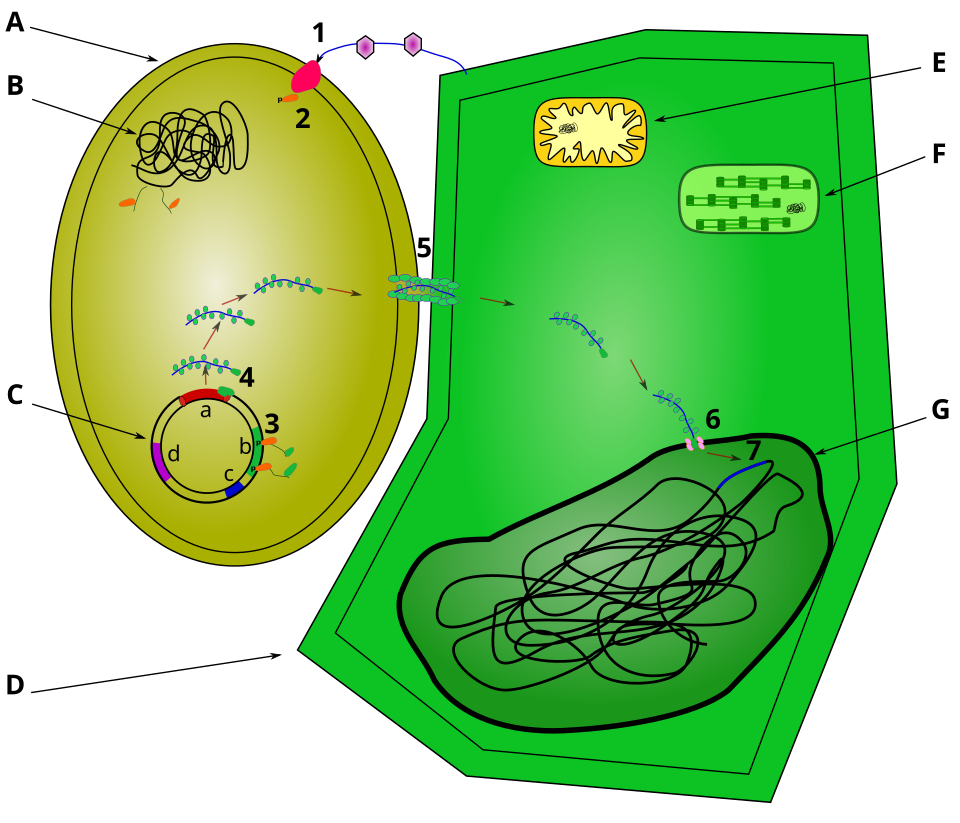
Agrobacterium tumefaciensAgrobacterium is a soil bacterium that naturally infects plants and causes a disease (a type of lump/tumor) called 'Crown Gall'. It contains a special plasmid—the Ti plasmid (Tumour-inducing Plasmid)—which naturally transfers a portion of its T-DNA into the plant cell's chromosome. Scientists have exploited this natural ability to remove the pathogenic portion of the Ti plasmid and replace it with a desired gene (such as the Bt gene)—thus Agrobacterium now acts as a 'natural gene carrier', delivering the desired gene into the plant cell on its own.
🖼️ Transfer of T-DNA into a plant cell by Agrobacterium tumefaciens – a natural gene-carrying system
(B) Transgenic animals
Gene transfer in animals is more challenging, and two main methods are used: microinjection, in which a very fine needle is used to inject the desired gene directly into the nucleus of a fertilized egg; and retroviral vector method, in which a retrovirus is used as a vector to introduce the gene into the cell.
- Transgenic cows/goats – engineered to produce human-use proteins in their milk, such as transgenic goats producing the neuroprotective protein tPA (useful in the treatment of heart attacks and strokes), from whose milk this protein is purified – this is called 'pharming' (Pharmaceutical + Farming).
- The 'Supermouse' experiment—creating a mouse nearly twice the size of a normal mouse by inserting a human/mouse growth hormone gene into mouse DNA—was a landmark experiment demonstrating the effectiveness of transgenic technology.
- Transgenic fish (such as the fast-growing AquAdvantage salmon) — fish that achieve marketable size in half the normal time by inserting a growth hormone gene.
💡 CHO cells — animal cell-based protein production: Chinese Hamster Ovary (CHO) cells are the most widely used mammalian cell line in the laboratory to insert human genes into complex proteins (e.g., human anticoagulant factor VIII, monoclonal antibodies). Unlike bacterial cells, mammalian CHO cells can make complex human proteins with their correct three-dimensional structure and sugar chains (glycosylation)—making them indispensable for complex therapeutic proteins.
◆ Transgenic organisms ◆ transgene ◆ Agrobacterium tumefaciens ◆ Ti plasmid ◆ T-DNA ◆ Crown Gall Disease ◆ microinjection ◆ Farming ◆ Supermouse ◆ CHO cells
9 Gene therapy
When a person is born with a defective or missing gene, the resulting disease is impossible to completely cure with conventional medicine—because the problem lies within the body's basic 'software' (DNA). Gene therapy is a cutting-edge medical approach that attempts to correct the effects of the defective gene by inserting a working copy of the healthy gene into the patient's cells—that is, correcting the root cause of the disease (the DNA-level defect) rather than just treating its symptoms.
In India, an estimated 21,000 children are born each year with a single-gene disorder—including thalassemia, sickle cell anemia, hemophilia, and severe combined immunodeficiency (SCID). Gene therapy is considered the most promising technique for a permanent cure for these diseases.
Gene Therapy Somatic vs. Germline
| Somatic gene therapy (currently in use) | Germline gene therapy (currently prohibited) |
|---|---|
| ◆ Gene correction in normal (non-reproductive) cells of the body ◆ The effect is limited to that person only. ◆ is not passed on to the next generation ◆ Currently clinically approved and practiced | ◆ Gene correction in germ cells (egg/sperm/embryo) ◆ Changes are passed on to subsequent generations. ◆ Serious ethical and safety concerns ◆ Human embryos are currently banned/prohibited in most countries. |
Major subtypes of gene therapy
A. Ex-vivo gene therapy: The patient's cells (such as bone marrow stem cells) are removed from the body and re-transplanted in the laboratory, inserting a healthy gene using a retroviral vector. Uses: SCID, sickle cell anemia, thalassemia, some blood cancers.
B. In-vivo gene therapy: The healthy gene is injected directly into the affected organ/tissue within the patient's body using an adenovirus vector. Uses: Experimental therapy for some cancers, Alzheimer's disease, and Parkinson's disease.
C. Antisense Therapy: Blocking the expression of a harmful gene—such as its experimental use in the treatment of certain brain tumors (malignant gliomas).
| Single-gene defect diseases | Gene therapy approach |
|---|---|
| Severe combined immunodeficiency (SCID) | Ex-vivo gene correction in bone marrow stem cells—the first successful gene therapy (1990) was for this disease |
| Hemophilia | Insertion of the anticoagulant factor VIII/IX gene into liver cells |
| Sickle cell anemia | Ex-vivo stem cell therapy for hemoglobin gene correction |
| Phenylketonuria (PKU) | Correction of the phenylalanine-degrading enzyme gene |
💡 Flavr Savr Tomatoes — Commercial Example of Antisense Technology: The Flavr Savr tomato, launched in 1994, was the first commercially genetically modified food product, using antisense technology to slow the expression of a gene that causes tomatoes to soften and rot quickly—significantly increasing the tomato's shelf life.
◆ gene therapy ◆ Somatic gene therapy ◆ Germline gene therapy ◆ Ex-vivo ◆ In-vivo ◆ Antisense Therapy ◆ SCID ◆ Hemophilia ◆ Sickle cell anemia ◆ Flavr Savr Tomato
10 Bioremediation and Biopesticides
Bioremediation is a technique that uses the natural ability of microorganisms (bacteria, fungi) or plants to remove or make less toxic harmful pollutants (e.g., oil spills, heavy metals, pesticide residues) from contaminated soil, water, or air—that is, 'using nature to clean up pollution'.
- Mercury-resistant bacteria: Certain specially engineered bacteria absorb toxic mercury from industrial wastewater and convert it into a less-harmful form.
- Oil-spill cleanup: Some bacteria (such as Pseudomonas species) are able to degrade the hydrocarbons of crude oil in marine oil spills.
- Phytoremediation: Some plants absorb heavy metals (such as lead, cadmium) from the soil through their roots and accumulate them, thereby purifying the soil.
Biopesticides (such as Bt-based insecticides, Trichoderma, Baculovirus) and biological nitrogen fixation have been described in detail in Chapter 9 (Beneficial and Harmful Microorganisms) – it is only worth mentioning here that direct gene-level transfer of Bt into plants (see Topic 7) is an extension of modern biotechnology, while microbial-based spraying is traditional biological control.
◆ Bioremediation ◆ Mercury-resistant bacteria ◆ Pseudomonas ◆ Phytoremediation ◆ Heavy metal absorption
11 Industrial Biotechnology – Enzyme, Antibiotic and Vitamin Production
Industrial Biotechnology (White Biotechnology) uses microorganisms and their enzymes to produce industrial products on a large scale—it is considered more energy-efficient and environmentally friendly than traditional chemical processes.
| Enzymes/Products | Industrial Use |
|---|---|
| Proteases | In the detergent industry for stain removal, in the leather industry |
| Amylases | To break down starch in textiles, bakeries, and brewing. |
| Glucoisomerase | In high-fructose corn syrup (sweetener) production |
| Lipases | In detergents, cheese production and fat processing |
| Pectinase | To clarify fruit juices |
Antibiotic production also involves industrial fermentation of microorganisms (mainly fungi and actinomycetes)—since the discovery of penicillin (1928), more than 6,000 natural antibiotic compounds have been isolated from various microorganisms (see Chapter 8 for details on the technological processes and classification of antibiotics). Similarly, many vitamins, such as vitamin B12 and riboflavin (vitamin B2), are also produced industrially by microbial fermentation, which is cheaper and more pure than chemical synthesis (see Chapter 9 for an in-depth look at fermentation technology).
◆ Protease ◆ amylase ◆ Glucoisomerase ◆ lipase ◆ Pectinase ◆ Vitamin B12 Fermentation ◆ Actinomycetes
12 India's Bio-economy and DBT/BIRAC policies
India today ranks among the top 12 biotech economies in the world, and third in the Asia-Pacific region. The Department of Biotechnology (DBT), Government of India, operating under the Ministry of Science and Technology, is the nodal agency for biotechnology research, policy-making, and industrial development in the country.
India's Bio-Economy – Statistics and Targets
| indicator | Statistic/Goal |
|---|---|
| Current bio-economy size | About US$165.7 billion (2024 estimate) |
| Targets by 2030 | approximately US$300 billion |
| Annual Budget of DBT (2025-26) | Approximately ₹3,446 crore |
| Startups supported by BIRAC | Over 3,000 biotech startups |
| BioNEST Incubation Centre | More than 75 centers across the country |
Major policies and projects
- Genome India Project: Completed in January 2025—The complete genomes of approximately 10,000 individuals from diverse populations across the country were sequenced, identifying approximately 180 million genetic variants. This is a milestone in understanding the genetic diversity of Indians and developing India-specific precision medicine.
- BioE3 Policy (Biotechnology for Economy, Environment and Employment, August 2024): National policy to promote high-performance biomanufacturing – focused on six priority areas (bio-based chemicals and enzymes, smart proteins and functional foods, precision biomedicine, climate-resilient agriculture, carbon capture and utilization, marine and space biotechnology).
- Bio-RIDE (Biotechnology Research Innovation and Entrepreneurship Development): Scheme to support research, innovation and entrepreneurship with an outlay of approximately ₹9,197 crore.
- BIRAC (Biotechnology Industry Research Assistance Council): A public sector undertaking of DBT, which provides financial assistance, incubation (through BioNEST centres) and technical support to biotech startups and small-medium enterprises.
To date, most human genome research has been based on Western (European) populations, while India's population is extremely genetically diverse. The Genome India project has created its own reference genome database of the Indian population, which will enable the development of effective medicines, disease-risk prediction, and personalized medicine specifically for Indians in the future.
◆ Department of Biotechnology (DBT) ◆ BIRAC ◆ BioNEST ◆ Bio-economy ◆ Genome India Project ◆ BioE3 policy ◆ Bio-Ride Scheme ◆ precision medicine
13 Stem Cell Research and Regulation in India
Stem cells are specialized cells in the body that possess two unique abilities—self-renewal and differentiation into various specialized cells (e.g., nerve cells, blood cells, and heart cells). This dual ability makes stem cells highly promising for repairing damaged tissues, treating degenerative diseases, and regenerative medicine.
| Embryonic stem cells | Adult stem cells |
|---|---|
| ◆ derived from early embryos ◆ Pluripotent – can become almost any type of cell ◆ Surrounded by ethical concerns (fetus is destroyed) ◆ Strict rules on research in many countries including India | ◆ obtained from bone marrow, umbilical cord blood, etc. ◆ Multipotent – can form a limited number of cell types ◆ Relatively few ethical controversies ◆ Most currently approved medical uses (such as bone marrow transplantation) are |
Regulation of stem cell research in India
- National Guidelines for Stem Cell Research 2025: Jointly issued by the Indian Council of Medical Research (ICMR) and the Department of Biotechnology (DBT) — sets ethical limits and scientific standards for stem cell research.
- NAC-SCRT (National Apex Committee for Stem Cell Research and Therapy): Registration and approval of all stem cell research proposals in the country mandatorily passes through this committee.
- Central Drugs Standard Control Organisation (CDSCO): CDSCO's permission is mandatory before any stem cell based medical product can be started for human clinical trials.
- Extremely strict ethical protocols apply to research on embryonic stem cells, and the use of human embryos for reproductive cloning is strictly prohibited in India.
There have been complaints that some private clinics in India are selling expensive and unverified treatments called "stem cell therapy" without scientific evidence or regulatory approval. The ICMR-DBT's 2025 guidelines primarily aim to curb such unregulated and unsafe practices and promote only scientifically proven treatments.
◆ Stem cells ◆ embryonic stem cells ◆ adult stem cells ◆ regenerative medicine ◆ National Guidelines 2025 ◆ NAC-SCRT ◆ CDSCO ◆ Multi-capable/Multi-power cell
14 Biotechnology in Rajasthan
Rajasthan, with its unique agro-climatic conditions (arid and semi-arid regions), is embracing biotechnology as an important tool for developing drought-tolerant crops, water conservation, and rural bioentrepreneurship. The state government has taken several concrete steps in this direction.
Rajasthan Biotechnology Policy 2015 and Biotech Park
Under the Rajasthan Biotechnology Policy 2015, three major biotech parks have been established to promote biotechnology research, industry and startups in the state:
| Biotech Park | place |
|---|---|
| Sitapura Biotech Park | Jaipur |
| Boranada Biotech Park | Jodhpur |
| Sotala Biotech Park | Alwar |
Bt cotton in Rajasthan
Bt cotton cultivation in Rajasthan began in 2005, and today its adoption rate exceeds 95% in the state's cotton-producing regions (primarily the Sri Ganganagar and Hanumangarh regions). From 2005 to 2015, Bt cotton adoption resulted in an increase in farmers' yields by approximately 60%, along with a significant reduction in the need for pesticide spraying—reducing production costs and increasing farmers' net incomes.
💡 Abu Saunf-440 — Rajasthan's Community Biotechnology Model (2025): Ishaq Ali, a farmer in Sirohi district, developed a drought-tolerant variety called 'Abu Saunf-440' through natural selection from traditional local fennel varieties, which yields well even with less water. This variety is now being grown on approximately 9,000 hectares in the Sirohi region. A Community Seed/Gene Bank has also been established by local farmers to preserve the seeds of this variety, an inspiring example of the confluence of traditional knowledge and modern crop improvement principles—showing that biotechnology is not limited to large laboratories but is also alive in farmers' fields.
- The Department of Biotechnology at Rajasthan Agricultural University (Bikaner) and Maharana Pratap University of Agriculture and Technology (Udaipur) are actively conducting research to develop drought-tolerant and disease-resistant crop varieties.
- Biotechnology based research programmes are also underway in the state for genetic conservation of local animal breeds like camel, goat and sheep (detailed discussion in Chapter 15).
◆ Rajasthan Biotechnology Policy 2015 ◆ Sitapura Biotech Park ◆ Boranada Biotech Park ◆ Sotala Biotech Park ◆ Bt cotton in Rajasthan ◆ Abu Saunf-440 ◆ Community gene banks
• Biotechnology is the science of using living organisms/their parts to develop useful products and processes – the cloning of the human insulin gene in 1978 was a major turning point. • Gene cloning (making copies of a single gene) is different from organism cloning (replicating an entire organism, such as Dolly the sheep); gene banks provide long-term preservation of genetic resources. • There are three main tools of genetic engineering – restriction enzymes (molecular scissors), vectors/plasmids (carriers) and DNA ligase (molecular glue). • Recombinant DNA technology involves systematic steps of gene clipping, insertion, ligation, transformation, selection and cloning. • PCR (Kerry Mullis, 1983) is a technique for amplifying a segment of DNA millions of times in the laboratory; DNA fingerprinting (Alec Jeffreys, 1984) establishes an individual's unique genetic identity. • Many life-saving drugs like insulin, growth hormones, anticoagulant agents, monoclonal antibodies are being made using recombinant DNA technology. • Bt cotton (based on the cry gene of Bacillus thuringiensis) is the most widespread GM crop in India; the Ti plasmid of Agrobacterium tumefaciens is a natural vector for creating transgenic plants. • Gene therapy (somatic—ex-vivo/in-vivo/antisense) treats single-gene diseases such as SCID, hemophilia, and sickle cell anemia by correcting the defective gene; germline gene therapy is currently prohibited. • India's bio-economy is worth approximately $165.7 billion, with a target to reach $300 billion by 2030 – the Genome India Project, BioE3 policy and Bio-RIDE scheme are major steps in this direction. • Three biotech parks in Rajasthan (Sitapura-Jaipur, Boranada-Jodhpur, Sotanla-Alwar) and farmer-led innovations like Abu Saunf-440 are taking biotechnology to the grassroots level.