- Introduction to the Human Reproductive System—Puberty and Sex Hormones
- Male reproductive system – structure of primary and secondary organs
- Female reproductive system – structure of primary and secondary organs
- Menstrual Cycle and Ovarian Cells
- Gametogenesis, fertilization, embryo implantation and parturition
- Introduction and classification of the nervous system
- Neuron – Structure, Types and Synapses
- Nerve impulse transmission—from polarization to saltatory transmission
- Brain Part 1 – Forebrain and Midbrain
- The Brain Part 2 – Hindbrain and Spinal Cord
- Peripheral and autonomic nervous systems—sympathetic versus parasympathetic
- Reflex Action and Nervous System Disorders
Every human life begins as a single, microscopic cell—so small that it's invisible to the naked eye. Yet, that single cell contains so much information that, in nine months, it becomes a full-fledged human being with millions of cells, a beating heart, and a thinking brain. This miracle is made possible by the human reproductive system. And from the moment that baby is born, another invisible system takes over—the one that makes the eyes close in the blink of an eye, pulls the hand away when a thorn pricks it, and keeps the heart beating and breathing going without warning—this is the nervous system, the body's fastest and most complex communication network. Interestingly, these two systems are deeply interconnected—because every major event in the reproductive system, from puberty to pregnancy, is guided by hormones and the brain. Let's understand these two amazing systems in detail—the ones that create life and those that control it.
1 Introduction to the Human Reproductive System—Puberty and Sex Hormones
Reproduction is the process by which an organism produces offspring of its own kind. Humans exhibit sexual reproduction, which is dioecious—that is, males and females exist in separate individuals. Fertilization of the male gamete (sperm) and the female gamete (ovum) results in the formation of a zygote, which subsequently develops into a new organism.
Puberty
The development of germ cells responsible for sexual reproduction occurs during a specific period called puberty. During this stage, sexual development becomes visible and reproductive maturity occurs—usually at the age of 12–14 years for girls and 13–15 years for boys. Sexual maturity is complete at around the age of 18–19 years.
| 👦 Signs of puberty in boys | 👧 Signs of puberty in girls |
|---|---|
| ◆ hoarseness of voice ◆ growing beard and moustache ◆ Hair growth in the armpits and genital area ◆ oily skin | ◆ Breast development and increase in size ◆ oily skin ◆ Hair growth in the genital area ◆ onset of menstruation |
At the root of all these changes is the secretion of various hormones. Testosterone in human males and estrogen and progesterone in women are the main sex hormones. During this period, significant changes also occur in human emotions and their intellectual and mental levels.
From a single cell to a complete human being: Remember—every human life begins as a single microscopic cell (zygote). The reproductive cells (sperm and egg) that develop in the body after puberty are what enable us to repeat this miracle in the future—to give birth to a new generation.
◆ sexual reproduction ◆ Dioecious ◆ Zygote ◆ Puberty ◆ Testosterone ◆ estrogen and progesterone
2 Male reproductive system – structure of primary and secondary organs
🖼️ Male reproductive system – structures from the testes to the urethra
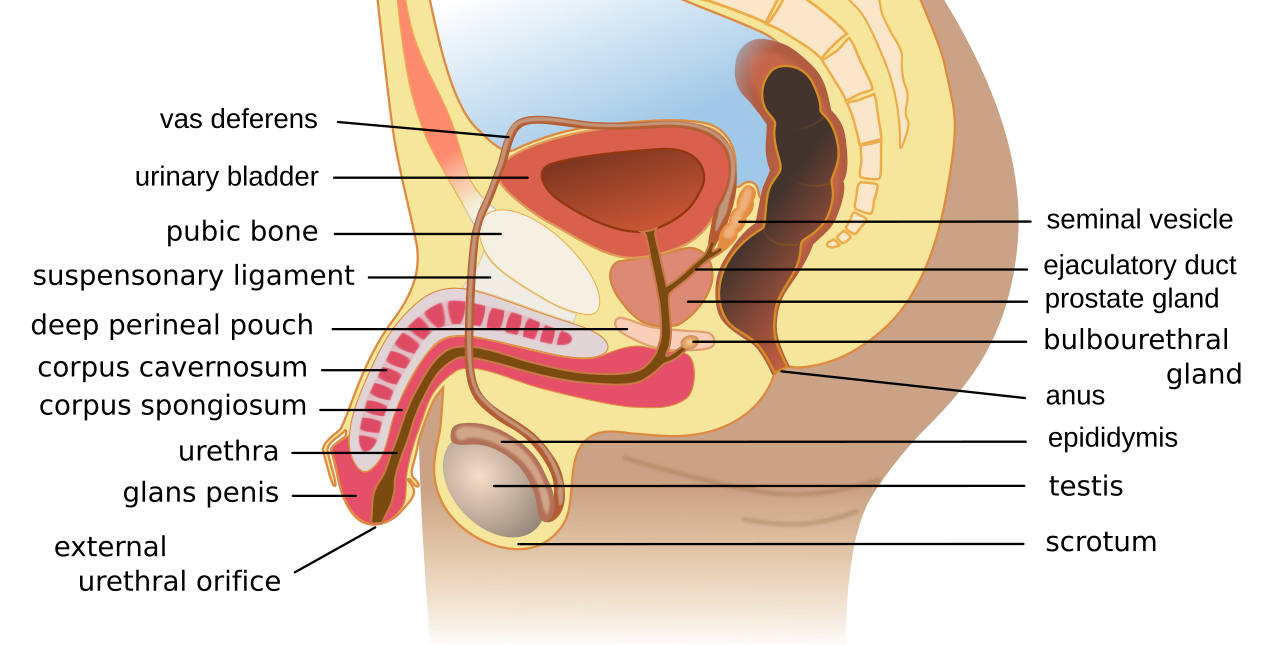
The male reproductive organs are mainly differentiated into two parts – primary and secondary sex organs.
Primary Reproductive Organs
The organs that produce reproductive cells or gametes (sperm) are called primary organs – these are called gonads.
Testes — Humans have a pair of testes, located outside the abdominal cavity in the scrotum. The testes have two main functions: Leydig cells secrete testosterone, and spermatogenic cells produce sperm; Sertoli cells provide protection, support, and nutrition to sperm.
Secondary Reproductive Organs
Any organs other than the testes that support the reproductive system are called secondary sex organs – their main function is to ensure the transport, nutrition, and maturation of sperm.
- Scrotum—Holds the testicles anchored outside the body. Spermatogenesis requires a temperature about 2-3°C lower than normal body temperature, so it acts as a thermoregulator.
- Epididymis – Nourishes sperm and stores them for about a month.
- Vas deferens—carries sperm to the seminal vesicle; joins with the seminal vesicle to form the ejaculatory duct.
- Seminal Vesicles — Produce a thick, viscous fluid that makes up about 60% of semen; this fluid provides sperm with energy and movement through fructose.
- Prostate gland—located just below the bladder; secretes a milky, alkaline fluid (about 30% of semen) that activates sperm and protects the urinary tract by neutralizing its acidity.
- Urethra – forms the urogenital tube and carries both urine and semen out through the penis.
- Penis – Erectile organ, which carries semen to the female genitalia.
| accessory gonad | secretion | Contribution to semen |
|---|---|---|
| Seminal Vesicles | thick liquid containing fructose | About 60% |
| Prostate gland | milky, alkaline liquid | About 30% |
| Cowper's Gland | secretion that lubricates the urinary tract | small amounts |
◆ Testis ◆ Leydig cells ◆ Sertoli cells ◆ seminal vesicle ◆ prostate gland ◆ Semen
3 Female Reproductive System – Structure of Primary and Secondary Organs
🖼️ Female reproductive system – structures from the ovaries to the vagina
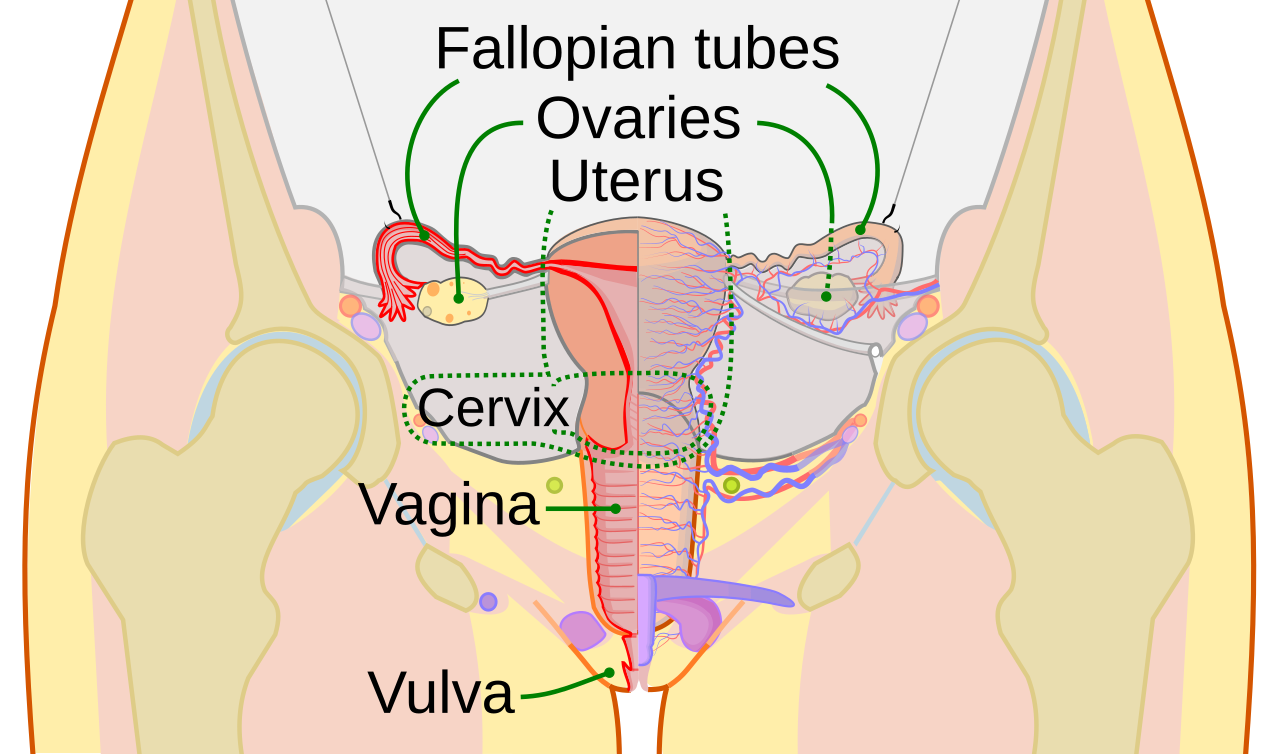
Primary Reproductive Organs
Females have a pair of ovaries as their primary sex organs. The ovaries have two primary functions: egg production (the production of female germ cells) and hormone secretion (as an endocrine gland, producing estrogen and progesterone). The ovaries are located in the abdominal cavity, below the kidneys, in the pelvic region, on either side of the uterus. Each ovary contains numerous ovarian follicles, which produce eggs.
Secondary Reproductive Organs
- Fallopian Tube — A tube about 10–12 cm long; finger-like structures at the mouth called fimbriae capture the egg released from the ovary. Fertilization occurs in the ampulla of this tube—its main function is to transport the egg to the uterus.
- Uterus — An inverted, pear-shaped muscular organ where the fertilized egg implants, the placenta develops, and the baby develops for nine months. During delivery, its walls contract and help push the baby out.
- Vagina—a flexible, muscular tube; Lactobacillus bacteria convert glycogen into lactic acid, keeping the vaginal tract acidic (pH approximately 3.5–4.5), reducing the risk of infection. It is also called the birth canal because childbirth takes place through it.
External genitalia – The vulva includes the mons pubis, labia majora, labia minora, clitoris, and Bartholin's glands (alkaline secretions that facilitate sexual activity).
Breast
The mammary glands are made up of milk ducts, similar to bunches of grapes, that nourish the newborn. The growth and function of the mammary glands are controlled by the hormones somatotropin, prolactin, estrogen, and progesterone.
Acidic vagina – the body's natural defense mechanism:The Lactobacillus bacteria in the vagina aren't harmful organisms, but rather the body's own "guards"—they convert glycogen into lactic acid, keeping the vagina acidic, preventing harmful germs from growing there. This is similar to how the acidic environment of the stomach prevents harmful bacteria from growing.
◆ Ovaries ◆ fallopian tubes ◆ Fimbria ◆ Uterus (Uterus) ◆ Vagina (Vagina) ◆ Lactobacillus
4 Menstrual Cycle and Ovarian Cells
After puberty, a woman's body undergoes a cyclical process each month designed to prepare her for a potential pregnancy—this is called the menstrual cycle. This cycle typically lasts 28 days and is divided into four phases:
| phase | Duration | Key hormones |
|---|---|---|
| Menstrual Phase | 1–5 days | Decline in estrogen |
| Follicular Phase | 6–13 days | Increased estrogen |
| Ovulation | Around the 14th day | LH Surge |
| Luteal Phase | 15–28 days | Progesterone |
Menstruation involves the inner lining of the uterus (endometrium), which has thickened to accept a potential fertilized egg, shedding blood and tissue if fertilization doesn't occur. Ovulation occurs around day 14—a mature egg is released from the ovary and travels into the fallopian tube. If fertilization doesn't occur, the cycle begins again with menstruation.
Main cells of the ovary and their functions
| cell name | place | Main functions |
|---|---|---|
| Oogenic cells | inside the follicle | Ovum formation |
| Granulosa cells | around the developing follicle | Nourishes the egg, helps produce estrogen hormone |
| Theca cells | in the outer layer of the follicle | Androgen hormone production (which further converts to estrogen) |
| Corpus luteum cells | in the area formed after ovulation | Progesterone secretion – helps maintain pregnancy |
The menstrual cycle can be thought of as a month-long 'preparation process'—the body prepares the uterus for a potential pregnancy each month, and if fertilization doesn't occur, it resets itself to begin preparations again. This cycle typically continues from menarche (the first menstrual period, around age 12–14) until menopause, usually around age 45–50.
◆ menstrual cycle ◆ menstruation ◆ Ovulation ◆ corpus luteum ◆ menstruation ◆ menopause
5 Gametogenesis, fertilization, embryo implantation and parturition
The process of reproduction in humans mainly takes place in the following stages:
(a) Gametogenesis
The process of formation of haploid gametes in the testis and ovary is called gametogenesis. The process of formation of sperms in the testis of male is called spermatogenesis and the process of formation of ova in the ovary of female is called oogenesis.
(b) Fertilization
When sperm released by the male during copulation come into contact with the female's egg, their fusion results in the formation of a zygote—a process called fertilization, which usually occurs in the fallopian tube.
(c) Cleavage and Embryo Implantation
After fertilization, the zygote undergoes mitosis, a process called cleavage. This results in the formation of a multicellular structure called a blastula/blastocyst. This blastocyst then implants itself in the endometrium of the uterus—a process called embryo implantation.
(d) Parturition/Delivery
After implantation, the embryo goes through various developmental stages (such as gastrulation). When the fetus is fully developed (about 9 months), the baby is born—this process is called parturition.
📐 Four Stages of Reproduction – Order – Thread/Process: Gametogenesis (sperm + egg formation) Fertilization – formation of a zygote Cleavage and Implantation – Blastocyst → Parturition – after about 9 months
💡 Journey from one cell to millions of cells: The zygote is a single cell, yet during cleavage it undergoes repeated mitosis to transform into millions of specialized cells (skin, bone, brain, heart, etc.) over 9 months – one of the most amazing processes in biology, where similar-looking cells develop over time into tissues with completely different functions.
◆ gametogenesis ◆ Spermatogenesis ◆ spawning ◆ fertilization ◆ Cleavage ◆ Embryo implantation ◆ childbirth
6 Introduction and classification of the nervous system
The various organs of the human body function in cooperation and coordination with each other. To maintain this coordination between organs, two main systems operate within the body—the nervous system and the endocrine system. Since the nervous system cannot directly control the functions of all cells, the ductless glands of the endocrine system act as messengers by secreting hormones.
Functions of the nervous system
- providing information about the outside world through the senses
- Enabling memory, thinking, and reasoning
- Control of all voluntary muscle movements (such as running, speaking)
- Regulating many involuntary functions (respiration, heartbeat, movement of food through the digestive tract)
Classification of the human nervous system
The human nervous system is mainly divided into two parts:
- Central Nervous System (CNS) — Consists of the brain and spinal cord; it is the main center for information processing.
- Peripheral Nervous System (PNS) — The group of nerves that originate from the brain and spinal cord and carry messages to and from the CNS. It has two subdivisions: the somatic nervous system (voluntary actions) and the autonomic nervous system (involuntary actions, further divided into sympathetic and parasympathetic).
Basic terminology: Stimulus – a sudden change in the external or internal environment; Impulse – a wave of electrical disturbance traveling through a nerve cell; Response – a change in the activity of an organism due to a stimulus; Receptors – cells that receive a stimulus and send a signal to the CNS; Effectors – muscles or glands that contract or secrete upon receiving an impulse.
◆ Central nervous system (CNS) ◆ Peripheral nervous system (PNS) ◆ stimulus ◆ Impulse ◆ receptor and effector ◆ the endocrine system
7 Neuron – Structure, Types and Synapses
🖼️ Structure of a neuron – cell body, dendrites, axon and myelin sheath
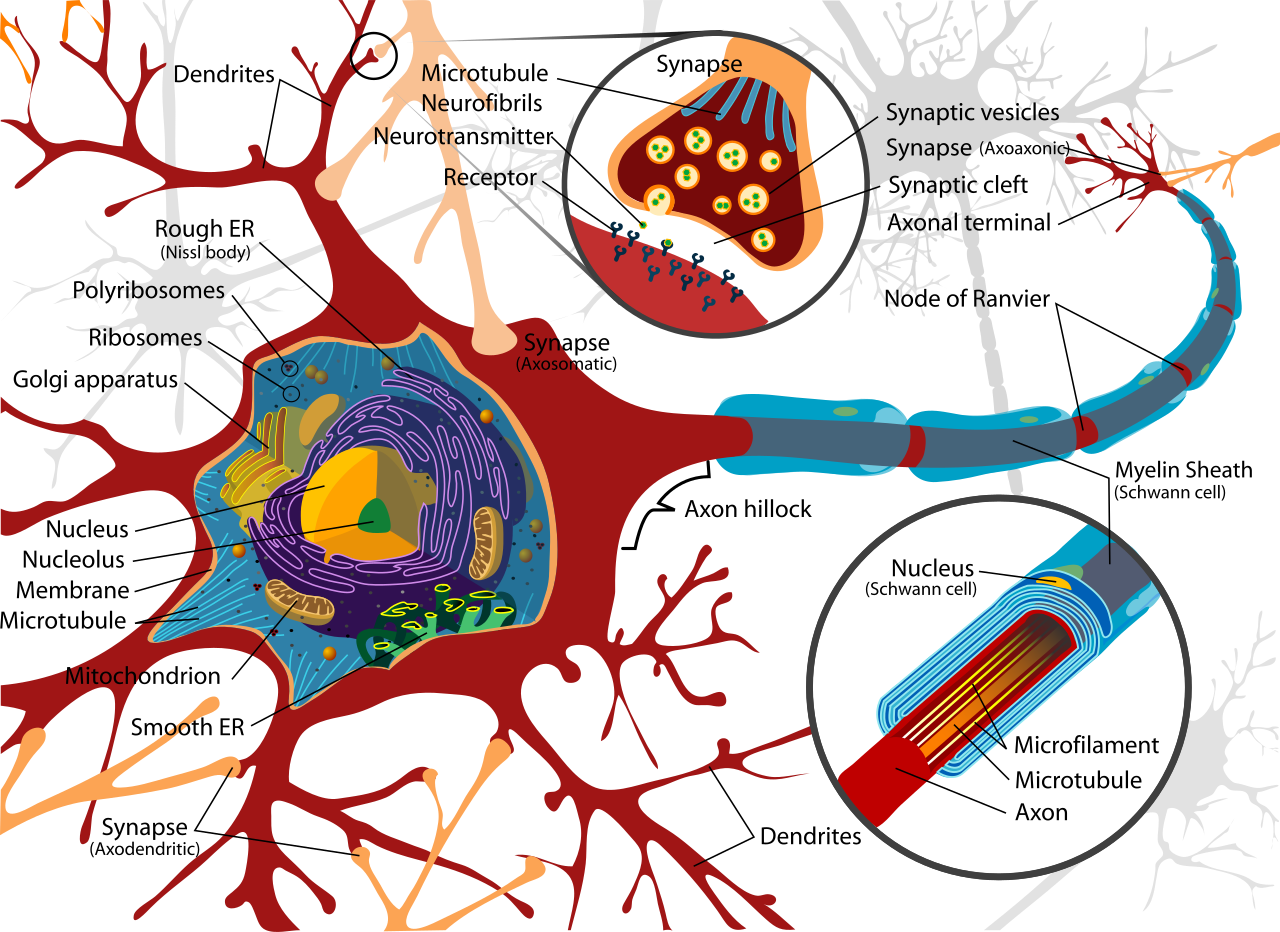
The neuron is the structural and functional unit of the nervous system. Nervous tissue contains two types of cells—neurons (information transmitters) and neuroglia (supporting cells).
Structure of a neuron
- Cell body (cyton or soma) – contains the nucleus, organelles such as mitochondria, and Nissl granules (dark-colored particles made of RNA and protein). The cytoplasm is called neuroplasm.
- Dendrites — Small, branched projections that extend from the cyton and transmit stimuli to the cell body. A single neuron can have up to 200 dendrites!
- Axon — A long, cylindrical fiber (1-20 microns thick) that extends from the cyton and carries the impulse to its terminal end. The terminal end contains synaptic buttons that connect to the dendron of another neuron.
- Myelin Sheath – A fatty sheath covering some axons that speeds saltatory transmission; it is broken down at the nodes of Ranvier.
Synapse
The point of communication between one nerve cell and another, or between a nerve cell and a muscle, is called a synapse. As an impulse travels from the dendrite to the axon, it reaches the synaptic site, where acetylcholine is released—it acts as a neurotransmitter (chemical messenger) that transmits the impulse to the next neuron.
Types of Neurons (Based on Structure)
- Unipolar neuron
- Bipolar neuron
- Multipolar neuron
- Apolar neuron
A single neuron can have up to 200 dendrites, meaning a single nerve cell can "hear" signals from up to 200 different sources simultaneously. This is why the billions of neurons in the brain combine to form such a complex and powerful information network—more complex than any modern computer network!
◆ Cytone/Soma ◆ Nissl particles ◆ dendrites ◆ Exxon ◆ myelin sheath ◆ Synapse ◆ acetylcholine
8 Nerve impulse transmission—from polarization to saltatory transmission
The conduction of a nerve impulse in neurons is an electrochemical phenomenon—the impulse travels along the fiber as an electrochemical wave. This is not simply a flow of electrons along a wire, but a self-propagating wave of depolarization.
Resting Potential
The nerve is in a polarized state—the axon is positively charged on the outside and negatively charged on the inside due to an excess of Na+ on its outer surface. This state is maintained by the sodium-potassium pump, which continuously pumps Na+ ions out through active transport, expending ATP energy—a mechanism similar to the continuous charging of a battery.
Depolarization – Action Potential
When a stimulus arrives, the membrane at that location becomes more permeable to Na+. The influx of Na+ exceeds the outflow of K+, causing the neuron to become negatively charged on the outside and positively charged on the inside—the potential generated during this process is called the action potential. This potential acts as a stimulus for other parts of the brain, causing the wave to propagate.
Repolarization
As the depolarization wave progresses forward along the neuron, the effect of stimulation in the previous regions ends and the neuron returns to the resting state – in this process K+ is released and Na+ is sent back out, this is called repolarization.
📐 Sequence of nerve impulse transmission – formula/process: Polarization → Depolarization → Repolarization
Under normal circumstances, nerve impulses are transmitted at a speed of about 45 m/s; this speed is much faster in myelin-sheathed fibers, because the impulse is transmitted by 'jumping' from one node of Ranvier to another—this is called saltatory conduction.
💡 Sodium pump — the body's continuously running pump: Every second, without pause, the sodium-potassium pump expends ATP energy to push out Na+ ions so that the nerve fiber is ready for the next signal—much like a battery constantly being charged without pause. Saltatory transmission is equally interesting—the impulse "jumps" from node to node instead of flowing directly down the wire, increasing the speed of transmission many times over.
◆ rest period ◆ sodium-potassium pump ◆ Depolarization ◆ Repolarization ◆ Saltatory transmission ◆ node of Ranvier
9 Brain Part 1 – Forebrain and Midbrain
🖼️ Vertical section of the human brain — forebrain, midbrain and hindbrain
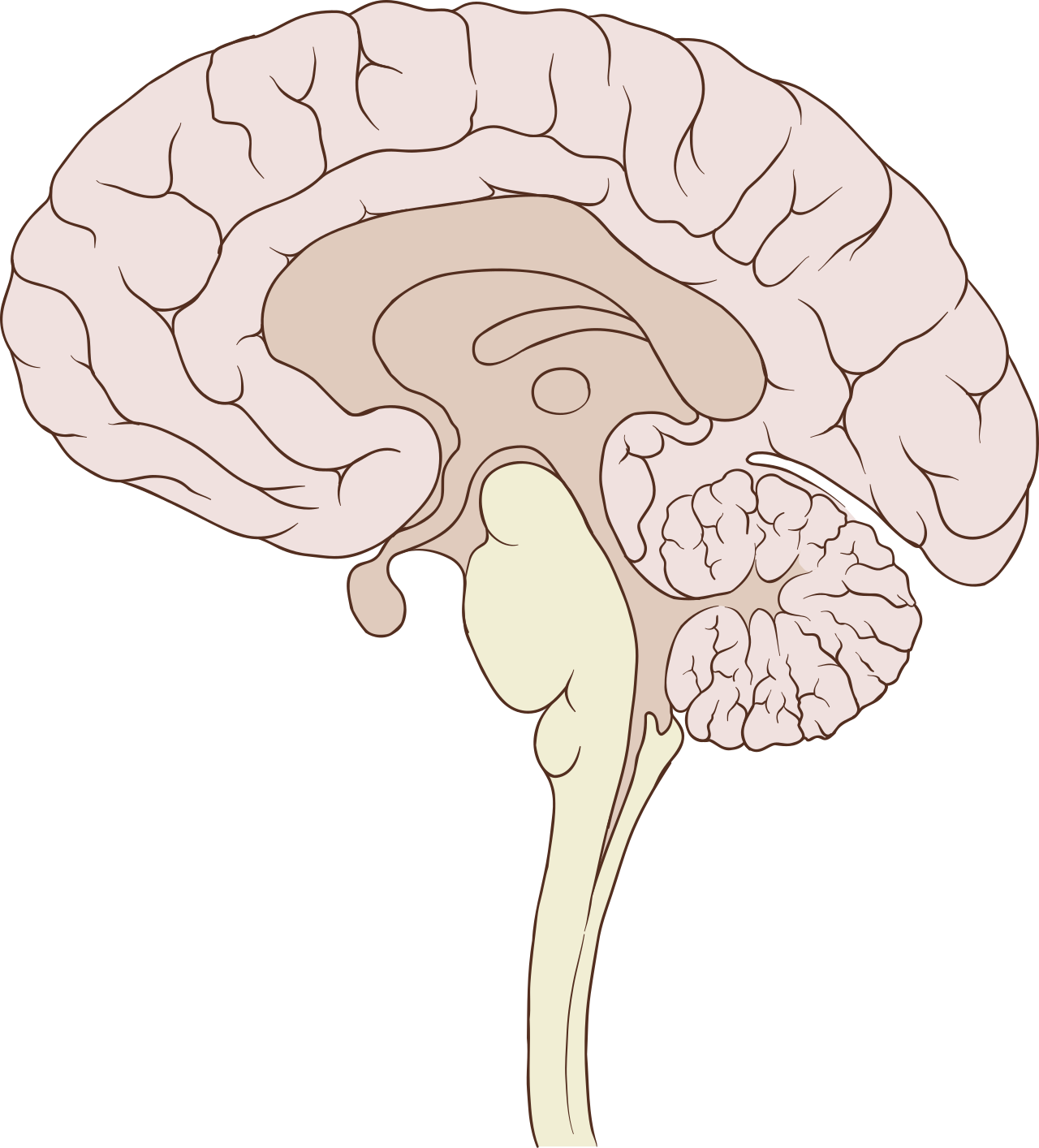
The brain is a delicate organ located in the cranium, protected by three meninges—the outer tough duramater, the middle thin meshwork arachnoid, and the innermost blood vessel-rich piamater. Cerebrospinal fluid (CSF) is filled between these membranes, which protects the brain from shock. The brain has three main parts—the forebrain, the midbrain, and the hindbrain.
Forebrain
(i) Cerebrum
The largest part of the brain is divided into two cerebral hemispheres. Each hemisphere is divided into four lobes—the frontal lobe, parietal lobe, temporal lobe, and occipital lobe. The outer part of the cerebrum is made up of gray matter (cerebral cortex), and the inner part is made up of white matter (cerebral medulla).
Functions: Sensory functions (vision—in the occipital lobe, hearing—in the temporal lobe, touch-heat-pain—in the parietal lobe), motor functions (the motor center located near the central fissure of the frontal lobe regulates the movements of all voluntary muscles), and coordination functions (the centers of higher mental functions such as intelligence, memory, consciousness, reasoning, and speech are located here).
Crossed control—reverse control of the brain:The left hemisphere of the brain controls the right side of the body, and the right hemisphere controls the left side—this "crossed control" always amazes students. The two hemispheres are connected by a sheet of nerve fibers called the corpus callosum.
(ii) Diencephalon
It has three parts – epithalamus (pineal gland is located here), thalamus (center for transmission and interpretation of sensory information like vision, taste, hearing, touch, temperature, pressure), and hypothalamus (bridge between nervous system and endocrine system; higher center of autonomic functions like hunger-thirst-sleep-anger-love; controls body temperature; controls the secretion of pituitary gland; also secretes vasopressin and oxytocin).
Midbrain
The smallest part of the brain, divided into two parts—the cerebral peduncles and the corpora quadrigemina (the quadrigemina—two peduncles for visual reflexes, two peduncles for auditory reflexes). This part controls and regulates reflex actions and provides a pathway for impulses to and from the brain.
◆ cerebrum ◆ cerebral cortex ◆ Corpus Callosum ◆ Thalamus ◆ Hypothalamus ◆ Midbrain
10 Brain Part 2 – Hindbrain and Spinal Cord
Hindbrain
| Part | Status/Structure | Main functions |
|---|---|---|
| Cerebellum | major part of the hindbrain | Coordination of voluntary muscles, facilitating activities like walking, writing, and regulating body balance and posture |
| Pons | Made of white matter, connects parts of the brain | Intermediate regulator of salivation, tears, eye movements, and mastication; pneumotaxic center (regulation of respiratory ventilation) |
| Medulla oblongata | the lowest part of the brain | Involuntary functions—respiratory center, cardiac center, vasomotor center; centers for swallowing, vomiting, sneezing, and coughing |
Cerebellum damage impairs a person's balance and coordination—walking, writing, and normal movements become difficult, highlighting how important this area is. The medulla oblongata is the part of the brain that directly controls life-sustaining involuntary functions (breathing, heartbeat)—so severe damage to this area can be fatal.
Spinal Cord
The spinal cord begins at the medulla and extends almost the entire length of the spine. Like the brain, it is also enclosed in three sheaths, between which is a layer of CSF. An important difference is that the arrangement of gray matter and white matter in the spinal cord is reversed—the white matter is on the outside and the gray matter is on the inside (whereas in the brain, the opposite is true).
The main functions of the spinal cord are: carrying out reflexes from the neck down, transmitting sensory impulses from the skin and muscles to the brain, and transmitting motor responses from the brain to the trunk and limbs.
Interchange of grey matter and white matter:In the brain, grey matter is on the outside and white matter is on the inside, while in the spinal cord it's exactly the opposite – it's an interesting 'mirror design' of the body, which can be used as a simple trick to remember: 'Thinking outside in the brain (grey matter), wiring outside in the spinal cord (white matter)'.
◆ Cerebellum ◆ Pons ◆ Medulla oblongata ◆ spinal cord ◆ gray matter and white matter
11 Peripheral and Autonomic Nervous System
The peripheral nervous system (PNS) is composed of two types of nerves—sensory nerves, which carry stimuli from the organs to the CNS, and motor nerves, which carry regulatory stimuli from the CNS to the relevant organs. Twelve pairs of cranial nerves arise from the brain, and 31 pairs of spinal nerves (cervical 8, thoracic 12, lumbar 5, sacral 5, and caudal 1) arise from the spinal cord.
Somatic vs. Autonomic Nervous System
| 🦵 Somatic nervous system | Autonomic nervous system |
|---|---|
| ◆ controls the actions that occur at will ◆ Examples: waving hands, walking, writing ◆ completely under voluntary control | ◆ performs involuntary actions ◆ Examples: heartbeat, digestion, respiration ◆ Two parts – sympathetic and parasympathetic |
The autonomic nervous system (ANS) maintains the body's internal environment and regulates vital bodily functions. It is divided into two parts: the sympathetic (active during times of pain, anger, fear, and stress) and the parasympathetic (active during times of pleasure, happiness, and satisfaction).
Effects of the sympathetic versus parasympathetic systems
| Organ | Sympathetic effect | Parasympathetic effect |
|---|---|---|
| Eye (pupil) | dilates the pupil | the pupil constricts |
| Heart | increases heart rate | Decreases heart rate |
| lungs/trachea | dilates the bronchi | constricts the bronchi |
| alimentary canal | Reduces contraction and discharge | Improves digestion and peristalsis |
| salivary glands | Reduces saliva secretion | Increases saliva secretion |
| sweat glands | Increases sweating | Reduces sweating |
| bladder | Relaxes the bladder, holding urine | Contracts the bladder, causing urination |
💡 Accelerator and brake – the body's emergency mechanisms: The sympathetic and parasympathetic systems can be thought of like the accelerator and brake of a car—the sympathetic system prepares the body for danger or an emergency (dilating the pupils, pounding the heart, and dilating the airways), while the parasympathetic system returns the body to a normal, calm state once the emergency is over. This is why the heart beats faster when we are afraid and returns to normal when we are calm.
◆ Cranial nerves (12 pairs) ◆ Spinal nerves (31 pairs) ◆ somatic nervous system ◆ autonomic nervous system ◆ sympathetic ◆ parasympathetic
12 Reflex Action and Disorders of the Nervous System
The process of carrying the stimuli received by the sensory organs to the spinal cord through sensory nerves and immediately sending the response to the muscles, tissues or organs through motor nerves and stimulating them is called reflex action. The innate or unconscious response to a stimulus or sudden change in the external environment is called simple reflex.
Examples of reflexive verbs
- shivering when cold
- Opening the mouth on hearing a sudden loud noise
- Closing of the eyes in front of bright light
- Blinking when an object suddenly appears before the eyes
- If a pin/needle pricks any part of the body, remove it immediately.
- Saliva in the mouth at the sight of good food
Types of reflexive verbs
- Unconditioned Reflex – Innate reflexes that occur automatically without learning or practice; e.g., immediately withdrawing the hand upon touching a hot object.
- Conditioned Reflexes — Learned reflexes that develop through practice and experience. A famous example is Ivan Pavlov's experiment on dogs, in which the sound of a bell caused the dog to salivate. Riding a bicycle is also an example of a learned reflex.
💡 Reflex action – reaction faster than thinking: When a hand touches a hot object, the command to pull away doesn't wait for its message to travel to the brain—the decision is made directly in the spinal cord, which is why it's so fast. This is why we pull away as soon as we touch something hot, even before we think about it—it's a brilliant body defense mechanism that doesn't waste precious time waiting for information to reach the brain.
Major disorders of the nervous system
| Disorder | Description |
|---|---|
| Paralysis | loss of movement and sensation due to nerve damage |
| Epilepsy | Seizures caused by abnormal electrical activity in the brain |
| Alzheimer's disease | gradual decline of memory and cognitive ability, especially in old age |
| Parkinson's disease | Difficulty controlling tremors and movement due to a lack of dopamine in the brain |
Interrelationship between the nervous system and the reproductive system:In this chapter, we saw that the hypothalamus controls the pituitary gland, which in turn influences the secretion of sex hormones like testosterone and estrogen—meaning that virtually every major event in the reproductive system, such as puberty, the menstrual cycle, and reproduction, is controlled by signals from the nervous system (brain). This is the remarkable coordination between the various systems of the body.
◆ reflex action ◆ unconditioned reflex ◆ Restricted reflex ◆ Pavlov's experiment ◆ paralysis ◆ Alzheimer's disease
• In the human reproductive system, sexual maturity occurs after puberty (12-14 years in girls, 13-15 years in boys) under the influence of testosterone and estrogen-progesterone hormones. • In the male reproductive system, the testes (produce sperm and testosterone) are the primary organs, while the seminal vesicles, prostate gland, and penis are secondary organs that help in the production and transportation of semen. • The ovaries (produce eggs and hormones) are the primary organs in the female reproductive system; the fallopian tubes, uterus, and vagina are secondary organs; the 28-day menstrual cycle consists of four phases (menstrual, follicular, ovulation, and luteal). • After gametogenesis (spermatogenesis/ovogenesis), fertilization results in the formation of a zygote, which transforms into a blastula by cleavage and is implanted in the uterus and after about 9 months the baby is born through delivery. • The nervous system is divided into two parts—the CNS (brain and spinal cord) and the PNS (cranial and spinal nerves); the neuron (cell body, dendrites, axon, and myelin sheath) is the basic unit of the nervous system, transmitting impulses through depolarization-repolarization cycles and saltatory transmission. • The brain is divided into three parts: the forebrain (cerebrum—thinking and reasoning; thalamus and hypothalamus), the midbrain (reflex regulation), and the hindbrain (cerebellum—balance; medulla—respiratory and cardiac control); the arrangement of gray matter and white matter in the spinal cord is opposite to that of the brain. • The autonomic nervous system is divided into sympathetic (active in emergencies) and parasympathetic (restorative); reflexes are immediate protective actions initiated by the spinal cord, without waiting for the brain, and are of two types: unconditioned (innate) and learned (learned).