- Introduction to Reproduction - Differences between Asexual, Vegetative and Sexual Reproduction
- Reproduction in lower plants – Chlamydomonas and Spirogyra
- Microsporogenesis in flowering plants – pollen formation
- Megasporogenesis in flowering plants – embryo sac formation
- Pollination – Types and Factors
- Fertilization and Double Fertilization
- Seed and fruit formation and germination
- natural vegetative propagation in plants
- Artificial propagation – cuttings and layering
- Grafting
- Micropropagation/Tissue Culture
- Advantages and disadvantages of vegetative propagation
One morning in 1846, in an Australian orchard, a grapevine was hanging from a vine with seedless bunches of grapes—the gardeners were astonished, for by then everyone knew that seeds were necessary for fruit to form, and fertilization was essential for seed formation. But here, neither pollination nor fertilization occurred—yet the ovary grew into a juicy fruit! Scientists named this unique phenomenon "parthenocarpy," meaning parthenocarpy. Today, by deliberately employing this same technique, we bring seedless grapes, bananas, and watermelons to our table. But there are even more astonishing things in the plant world—if a single leaf of the garden stonecrop (Bryophyllum) breaks off and falls on wet soil, dozens of tiny plants sprout from the tiny buds on its edges—without any flowers, without any seeds! This means that plants have discovered not just one but many ways to propagate themselves—sometimes by flowering, sending pollen, and fertilization; sometimes by creating new life directly from a piece of their root, stem, or leaf. Let's explore this amazing journey of plant reproduction—from asexual to sexual, and from nature to artificial technologies created by humans—in detail.
1 Introduction to reproduction – Differences between asexual, vegetative and sexual reproduction
Reproduction is the biological process by which living organisms produce offspring of their own kind, thereby maintaining the continuity of a species. Plants reproduce primarily in three ways: vegetative, asexual, and sexual.
| Base | Vegetative/Asexual Reproduction | sexual reproduction |
|---|---|---|
| Parent number | One parent is enough | Usually two parents (male and female) are required. |
| Gamete fusion | would not have | occurs (fusion of male and female gametes) |
| meiosis | Usually not (exception in sporulation) | occurs (during gamete formation) |
| nature of offspring | exact replica/clone of the parent | Genetically different (new combinations of traits) |
| motion | Rapid, more offspring in less time | relatively slow |
| Example | Potato tuber, rose cutting | Seed formation in flowering plants through pollination and fertilization |
Subtypes of Vegetative/Asexual Reproduction
- Vegetative Reproduction — The formation of a new plant directly from vegetative (body) parts such as roots, stems, and leaves; only mitosis occurs, and the offspring are clones of the parent.
- Fragmentation – In filamentous algae (such as Spirogyra), each fragment formed by the breakage of a filament develops into an independent new filament.
- Fission – In unicellular organisms (bacteria, yeast), the division of the parent cell into two, four, or eight daughter cells.
- Budding – In unicellular plants like yeast, a bud forms on the surface of the parent cell and separates to form a new organism.
- Spore formation (Sporogenesis) — Plants such as fungi, mosses, and ferns produce tiny, protective spores that germinate under favorable conditions to form a new plant. In higher plants such as peas and maize, sporogenesis is always heterosporous — that is, after meiosis, both small microspores (forming male gametophytes) and large megaspores (forming female gametophytes) are formed.
Some plants, such as dandelions, exhibit a remarkable asexual process called apogamy—in which a diploid somatic cell in the ovule develops directly into an embryo without pollination or fertilization, and the ovule matures and propagates like a normal seed. This means that a seed is formed, but there is no sexual process behind it—this trick of nature allows the plant to propagate an exact replica of itself in the form of seeds.
◆ reproduction ◆ vegetative reproduction ◆ refutation ◆ fragmentation ◆ budding ◆ Spore formation ◆ heterosporous ◆ decoupling
2 Reproduction in lower plants – Chlamydomonas and Spirogyra
To understand the diversity of reproduction in lower plants (algae), two well-known examples are considered—the unicellular Chlamydomonas and the filamentous Spirogyra. Both are haploid, and hence are called gametophytes.
Chlamydomonas
It is a unicellular, pear-shaped alga found in freshwater, with two flagella at its narrow end, a light-sensitive eyespot, and a cup-shaped chloroplast.
In this, asexual reproduction takes three forms depending on the availability of water – in sufficient water, motile spores (Zoospores) are formed (2-16 daughter cells are formed by mitosis within the parent cell, each of which develops flagella and is released when the parent wall bursts); in thin water layer, immobile spores (Aplanospores) are formed (this stage is called 'Pamela stage'); and when the water dries up, hypnospores are formed, whose thick black-brown wall provides protection during adverse times.
Sexual reproduction can be of three types – isogamy, where both the fused gametes are equal in size, anisogamy, where the female gamete is larger than the male gamete, and oogamy, where the entire contents of the female cell become a non-motile egg, which is fertilized by only one of the many motile male gametes. The diploid zygote formed by fusion remains dormant by forming a thick pigmented wall (zygospore), and when the right time comes, it forms four haploid motile spores by meiosis, which develop into a new plant.
Spirogyra
It is a filamentous (thread-like) alga that floats in freshwater, with each cell containing one or more coiled ribbon-like chloroplasts. Its vegetative reproduction occurs by fragmentation—each fragment of the filament breaks up into a new filament through mitosis.
Its sexual reproduction occurs by a special method—slippery conjugation—which is of two types: scalariform conjugation, in which two separate filaments come together to form a ladder-like shape and a connecting tube is formed between the opposite cells of both filaments, through which the cell material of one filament (male) reaches the cell of the other filament (female) by amoeboid movement and gets fused; and lateral conjugation, in which fusion occurs by forming a lateral tube between consecutive male and female cells in the same filament. The zygote formed by the fusion remains dormant by forming a thick wall, and under favorable conditions a new haploid filament is born by meiosis (in which three out of four nuclei are destroyed).
Both Chlamydomonas and Spirogyra follow the same underlying story of reproduction – 'rapid reproduction (asexual) in good times, waiting for life with a strong protective shield in bad times (sexual/dormant zygote)' – this strategy helps lower plants survive in uncertain aquatic environments.
◆ Chlamydomonas ◆ Spirogyra ◆ mobile spores ◆ homozygous ◆ anisogamous ◆ oocyte ◆ conjugation ◆ zygote
3 Microsporogenesis in flowering plants – pollen formation
As we learned in the chapter on parts of a plant, the androecium of a flower is made up of stamens, and the anther of each stamen contains four pollen sacs (microsporangia). It is in these anthers that the entire process of microsporogenesis takes place.
wall structure of anther
The wall of a mature anther is composed of three layers—the epidermis (outermost, protective), the middle layer (middle layer, thin-walled cells), and the tapetum (innermost layer, made of larger cells)—the tapetum plays an important role in nourishing the developing pollen grains, and can therefore also be called the 'nursery' of the pollen grains.
pollen formation
Each anther contains large, densely cytoplasmic sporogenous cells (microspore mother cells). These cells undergo meiosis, producing four haploid microspores from each mother cell, arranged in a tetrad—each microspore later becomes a pollen grain, the first cell of the male gametophyte.
structure of pollen grain
The pollen grain wall is made up of two layers – the exine, which is made of the extremely durable substance sporopollenin, and has thin spaces called germ pores from where the pollen tube emerges; and the intine, which is a thin inner layer made of cellulose. The nucleus of the pollen grain moves towards the periphery and divides, forming a large vegetative cell and a small generative cell. Note – the pollen grain itself is not the male gamete, but the structure that produces male gametes, i.e., the male gametophyte.
Sporopollenin is such a durable substance that it can withstand acids, alkalis, and high temperatures—which is why pollen grains thousands or even millions of years old are preserved in fossils. Paleobotanists use the study of these ancient pollen grains (called palynology) to reconstruct the climate and vegetation of thousands of years ago—palynology is also used to assess the quality of honey.
◆ Anther ◆ Tapetum ◆ microspore mother cell ◆ Pollen ◆ Outer shell ◆ interstitial ◆ sporopollenin ◆ genital pore ◆ Male zygote
4 Megasporogenesis in flowering plants – embryo sac formation
Within the ovary of the gynoecium are found the ovules, which are actually integumented megasporangium — this is where the female zygote, the embryo sac, is formed.
Structure of the ovule
The central part of the ovule is called the nucellus, which is surrounded by one or two coverings—integuments—with a small opening called the micropyle—the opening through which the pollen tube enters. The ovule is attached to the ovary wall (funiculus) by a stalk—the funiculus—and the end directly opposite the micropyle is called the chalaza.
Embryo development
A hypodermal cell of the nucellus enlarges to form the megaspore mother cell, which undergoes meiosis to produce four haploid megaspores—three of which are destroyed, leaving only one viable megaspore. This viable megaspore enlarges and undergoes three successive mitotic divisions, producing a total of eight haploid nuclei—this is the young embryo sac.
These eight nuclei become arranged in three groups—three at the micropylar end, three at the chelicerae, and two in the center. Cell walls form around all but the central two nuclei—thus the final mature embryo sac contains eight nuclei but only seven cells, arranged as follows:
- Egg Apparatus (at the micropylar end) – An egg cell (female gamete) and two synergids, which help in guiding the pollen tube to the egg cell.
- Antipodal Cells – Three cells that are destroyed just before fertilization to nourish the developing embryo.
- Polar Nuclei (in the center) – Two nuclei, which often fuse together to form a diploid secondary nucleus.
🖼️ Longitudinal section of a flower – Reference image to understand the position of the ovule and embryo sac
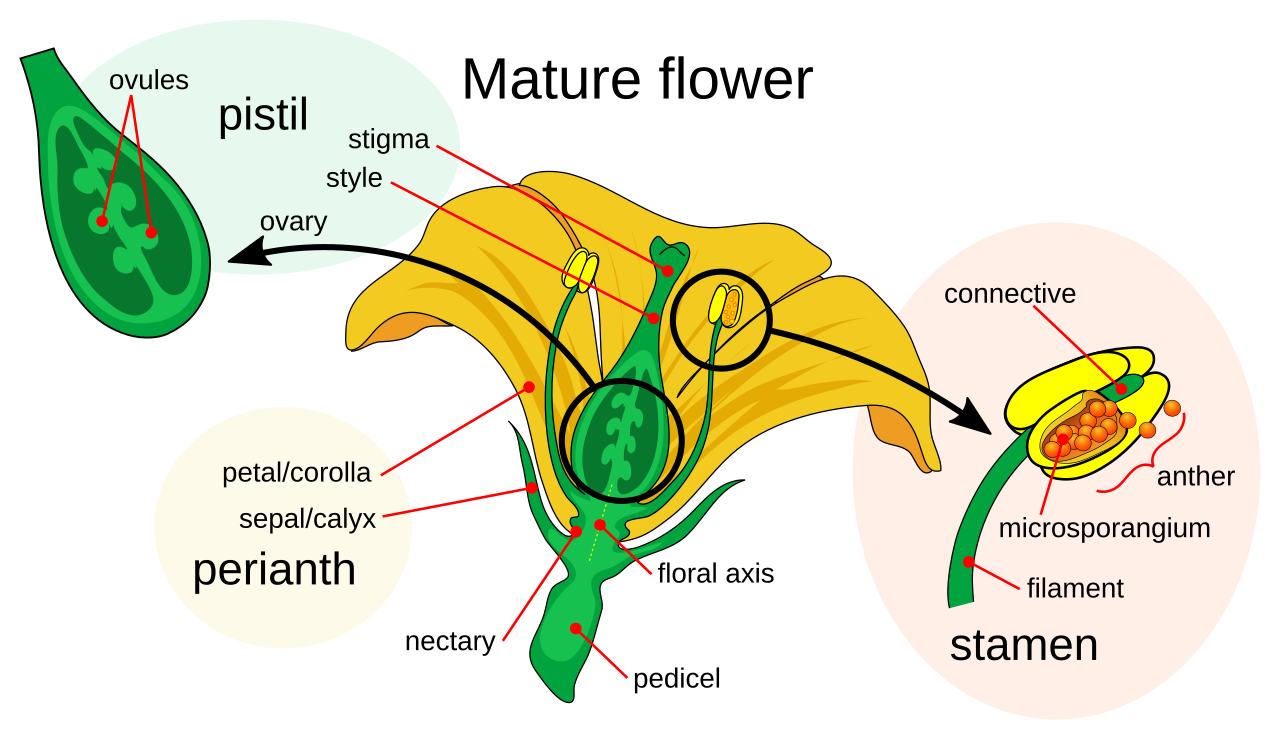
◆ Ovary ◆ integument ◆ Ovarian orifice ◆ Ovule ◆ Nibhag ◆ megaspore mother cell ◆ Embryo ◆ Egg Equipment ◆ subsidiary cell ◆ antipodal cell ◆ Polar nucleus
5 Pollination – Types and Factors
The transfer of pollen grains from the anther to the stigma is called pollination. It is of two types—self-pollination, in which pollen grains reach the stigma of the same flower or another flower of the same plant (e.g., peas, chickpeas—common in legumes); and cross-pollination, in which pollen grains from one plant reach the flower of another plant of the same species (e.g., palm, maize).
Importance of pollination
- Pollination makes fertilization possible, which causes the ovule to develop into a seed.
- Cross-pollination creates new gene combinations, leading to the development of new varieties—this is the main source of genetic diversity.
- Growth hormones secreted by the pollen tube stimulate the ovary to develop into a fruit.
Agents of cross-pollination and floral adaptations
| Factor | floral adaptations | Example |
|---|---|---|
| Anemophily | Flowers small, pale, and odorless; abundant, light pollen; stigma large and hairy | Grass, maize |
| Entomophily | Flowers large, colorful, attractive; secrete nectar | Hibiscus, Mustard, Salvia (bee pollinated) |
| जल (Hydrophily) | A large number of pollen grains float on the surface of the water and reach the female flowers. | Hydrilla, Vallisneria |
| Birds/Animals (Ornithophily/Zoophily) | Attractiveness due to bright colors, large size and fragrance | Canna/Gladiolus by Sunbird, Semal by Squirrel |
Floral adaptations that promote cross-pollination
- Unisexuality – Flowers are only male or only female, on separate plants (papaya, palm – dioecious) or on the same plant (maize – bisexual).
- Dichogamy – The anther and stigma mature at different times – e.g., in sweet pea and salvia, the anther matures first, and in custard apple, the carpel matures first.
- Self-sterility – In plants like petunia and apple, their own pollen grains are unable to fertilize even though they are present on the stigma of the same flower.
Measures to ensure self-pollination
- Cleistogamy – Flowers remain closed until pollination occurs, thereby eliminating the possibility of external pollen reaching them.
- Homogamy – The maturation of male and female organs simultaneously, as in peanuts.
◆ pollination ◆ Self-pollination ◆ cross-pollination ◆ Anemophily ◆ Entomophily ◆ Hydrophily ◆ bimaturity ◆ Self-sterility ◆ Cleistogamy
6 Fertilization and Double Fertilization
After reaching the right stigma, under favorable conditions, the pollen grain germinates and releases a pollen tube, which emerges from the germinal pore, pierces the tissues of the stigma and style and enters the embryo sac through the micropyle. During this, the nucleus of the vegetative cell (tube nucleus) remains at the anterior end of the tube and guides it and eventually gets destroyed, while the generative cell divides and forms two male gametes, which reach the anterior end of the tube. The pollen tube pierces a subsidiary cell (Synergid) and bursts, and both the male gametes are released into the embryo sac.
Double fertilization—a unique feature of flowering plants
Fertilization in flowering plants (angiosperms) is a unique event in which two separate fusions occur simultaneously—hence the name 'double fertilization':
- Syngamy – The first male gamete fuses with the egg cell to form a diploid zygote, which further develops into the embryo.
- Triple Fusion – The second male gamete fuses with both polar nuclei (or the already fused secondary nucleus) to form a triploid (3n) primary endosperm nucleus, which further develops into the endosperm and nourishes the embryo.
📐 Summary of Double Fertilization – Formula/Process: Male gamete-1 (n) + egg cell (n) → zygote (2n) → embryo Male gamete-2 (n) + secondary nucleus (2n) → primary endosperm nucleus (3n) → endosperm
The importance of fertilization is twofold—first, it stimulates the ovary to develop into a fruit; second, it creates a new combination of traits from both parents in the zygote, contributing to the diversity of the offspring. This process of double fertilization is found only in angiosperms (flowering)—which is why they are considered the most evolutionarily advanced plant group.
◆ Pollen tube ◆ double fertilization ◆ Gamete fusion ◆ Tri-fusion ◆ zygote ◆ primary endosperm nucleus
7 Seed and fruit formation and germination
We have already described the external structures of seeds and fruits (seed coat, embryo, pericarp, etc.) in detail in the chapter "Parts of a Plant." Here, we will consider the internal development that occurs immediately after fertilization, so that we can connect the complete chain from double fertilization to seed formation.
Development of endosperm
The triploid primary endosperm nucleus undergoes repeated mitotic divisions to form the endosperm, which nourishes the developing embryo. This development can occur in three ways – nuclear type (most common in maize, wheat, rice – in which repeated nuclear divisions occur first, the cell wall is formed later from the periphery towards the centre), cellular type (cellular type, the cell wall is formed immediately after each division), and helobial type (intermediate form). In dicotyledonous plants like peas and chickpea, the endosperm is absorbed by the cotyledons before the seed ripens, whereas in cereals and coconut it remains till the seed matures.
Embryo development
The zygote first divides to form an upper embryonic cell and a lower suspensor cell. The lower cell divides to form a suspensor, which pushes the developing embryo into the endosperm, facilitating its access to nutrition. The upper embryonic cell divides repeatedly and differentiates into the radicle, plumule, and cotyledon(s)—thus forming two cotyledons in dicotyledonous seeds (such as peas) and a single cotyledon (called the scutellum) in monocotyledonous seeds (such as wheat).
Sometimes more than one embryo develops in a single ovule, a phenomenon called polyembryony. This can occur in two ways: adventitious polyembryony (when additional embryos are formed from other cells of the embryo sac, such as accessory or antipodal cells), and cleavage polyembryony (when the zygote itself divides to form more than one independent embryo). This phenomenon is particularly seen in citrus fruits (lemon, orange).
Seed germination
Upon receiving favorable moisture, temperature, and oxygen, the seed absorbs water, swells, converts stored food into soluble forms (sugars, amino acids) through enzymes, the seed coat bursts, and first the radicle (root) and then the plumule (shoot) emerge. This can occur in two ways—epigeal germination, in which the cotyledons emerge from the soil—beans, castor, neem) and hypogeal germination, in which the cotyledons remain within the soil—peas, maize, rice), as we also briefly saw in the chapter on 'Parts of a Plant'.
◆ endosperm ◆ suspensor ◆ polyembryony ◆ epidermal germination ◆ subterranean germination
8 Natural Vegetative Propagation in Plants
Vegetative propagation involves the direct development of a new plant from a vegetative part—a root, stem, or leaf—that is a genetic clone of the parent. We have studied most of these stem-related modifications (rhizomes, corms, scale tubers, nodular tubers, epiphytes, etc.) in detail in the chapter on "Parts of a Plant"—here we bring them together from a reproductive perspective and explore leaf propagation afresh.
| Part | Method | Example |
|---|---|---|
| Root | adventitious buds on nodular roots | Asparagus, sweet potato |
| Stem (underground) | rhizome, corm, flaky tuber, nodular tuber | Ginger, arbi, onion, potato |
| Stem (semi-aerial) | sucker | grass, chrysanthemum |
| leaf | adventitious buds on the leaf margins | Stonecrop (Bryophyllum), Kalanchoe |
| Special parts | bulbil (small vegetative organ formed from a flower bud) | Agave, Oxalis, Pineapple |
Leaf propagation – a unique example of stonecrop
Bryophyllum and Kalanchoe have adventitious buds formed in tiny grooves on the edges of their leaves, which gradually develop into tiny plants – when the leaf breaks off and falls on wet soil (as described in our Hook story), these plants detach and take root independently.
◆ vegetative propagation ◆ clone ◆ adventitious bud ◆ bulbil ◆ stone breaker
9 Artificial propagation – cuttings and layering
Apart from natural methods, humans have developed many artificial propagation techniques in agriculture and horticulture to grow plants on a large scale, rapidly and with desired qualities.
Cutting
A piece of the plant stem (containing at least one bud) is cut and planted directly in soil or water, where it develops adventitious roots and buds to become an independent plant. This is the simplest, cheapest, and fastest method of commercial propagation for plants such as roses, bougainvillea, crotons, coleus, money plants, and sugarcane—it is widely used in the nursery industry.
Layering
In this method, a lower, flexible branch of the plant is bent towards the ground without separating it from the parent plant. A ring of bark is removed from that part, and it is covered with moist soil, leaving the tip of the branch exposed outside the soil. Within a few weeks, the buried part develops sufficient adventitious roots, after which it is cut from the parent plant and planted as an independent plant – this method is popular with jasmine, strawberries, grapes, and bougainvillea.
Air Layering/Gootee
When bending a branch to the ground is not possible (such as in long, woody stems), a ring of bark is removed from a selected branch at a higher level, the wound is covered with moist moss and wrapped with a polythene sheet. After some time, when roots appear at the site, the branch is cut just below the roots and planted in a separate pot or in the ground—this method is especially used with litchi, guava, and ornamental plants.
◆ Cutting ◆ Layering ◆ Gooty ◆ adventitious roots
10 Grafting
Grafting is a technique that involves joining parts of two different plants so that they fuse and grow as a single plant. It involves two parts—a stock, which is a rooted, disease-resistant, and physically strong plant; and a scion, which is a small piece of stem taken from a plant with desired characteristics (tasty fruit, beautiful flowers).
Method of grafting
The lower end of the scion is cut at an angle, wedge-shaped. A vertical slit is made in the cutting stem, into which the scion is inserted, so that the vascular tissue layers (cambium) of both parts come into contact as closely as possible. The joint is then tightly bound with tape or a rubber band until the tissues of both parts fuse together and establish a continuous vascular system.
🖼️ Various traditional methods of grafting – ways of joining the scion and the scion
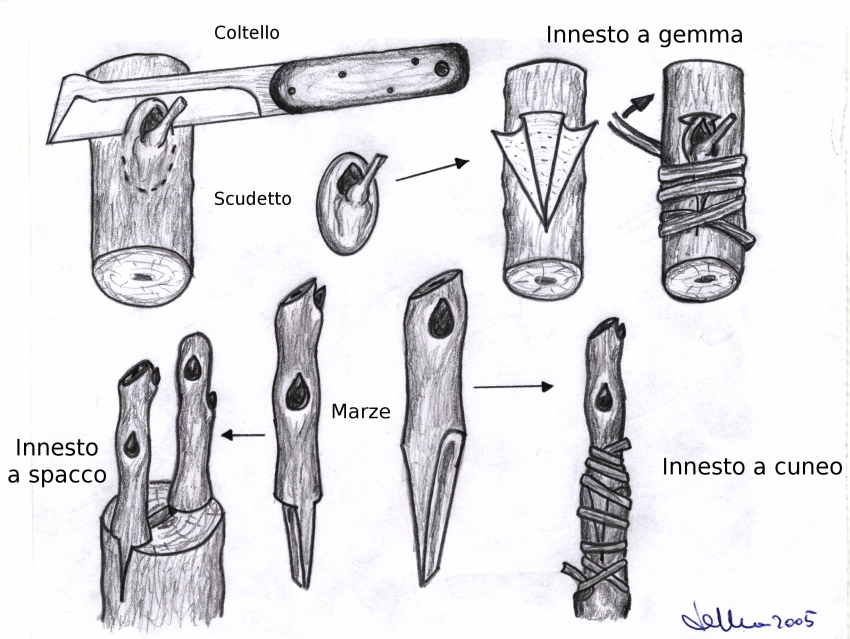
Grafting is primarily successful in dicotyledonous plants, and is of great importance in commercially breeding improved varieties of flowers and fruits—especially those that do not produce the same characteristics as the parent variety when grown from seed (such as seedless varieties).
| Crop | Use of grafting |
|---|---|
| Mango | Large-scale production of improved taste-quality varieties (e.g., Dasheri, Langra) |
| Apple | grafting improved fruit varieties onto disease-resistant roots |
| Citrus fruits | Uniformity and early fruiting in lemon-orange varieties |
| Rose, Bougainvillea | Growing flowers of different colors on the same plant (multi-colored grafted plants) |
◆ grafting ◆ rootstock ◆ Sion ◆ cambium contact
11 Micropropagation/Tissue Culture
This is the most advanced artificial propagation technique based on modern biotechnology, in which thousands of identical plants can be produced from a very small piece of tissue, organ or even a single cell of a plant (called 'Explant').
process of micropropagation
- A healthy tissue fragment (explant) is taken from the plant.
- It is transferred to a container containing a nutrient medium under sterile/aseptic conditions.
- The tissue grows rapidly to form an unorganized mass of cells called a callus – this callus can be maintained and expanded indefinitely.
- Small parts of the callus are transferred to a special hormone-containing medium, which induces differentiation and the formation of small plantlets.
- These seedlings are gradually transferred to pots/soil to grow into full-grown plants.
🖼️ Micropropagation/Tissue Culture Process – From Explant to Callus and from Callus to Plantlets
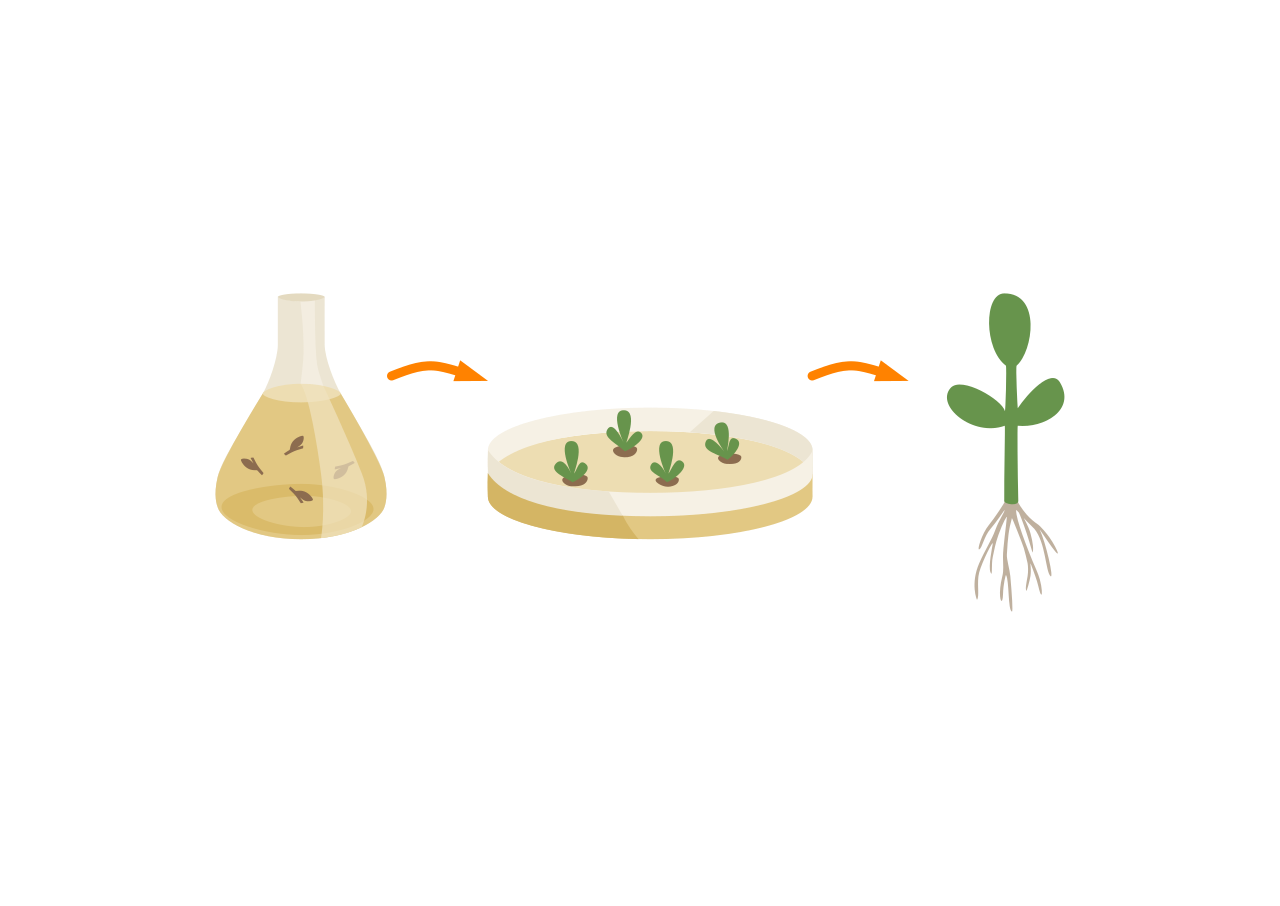
The biggest advantage of this technique is that an unlimited number of genetically identical (disease-free) plants can be produced from even a small amount of tissue from the parent plant. In India, micropropagation is being successfully used in the commercial production of plants such as orchids, carnations, chrysanthemums, and asparagus—in addition, this technique has become the backbone of the agricultural industry today, producing disease-free seedlings in crops such as banana, potato, and sugarcane.
◆ micropropagation ◆ explant ◆ sterile conditions ◆ Callus ◆ Plantlet
12 Advantages and disadvantages of vegetative propagation
Whether natural or artificial, vegetative propagation techniques have their own specific advantages and limitations, which are important to understand from the perspective of agricultural policy and crop management.
| 🟢 Benefits | 🔴 Disadvantages |
|---|---|
| ◆ Fast and simple method of propagation – rapid propagation without waiting for seed germination ◆ The offspring is an exact replica of the parent, preserving the desired traits (taste, color, yield) ◆ The plant survives adverse weather conditions through food-storage organs (tubers, rhizomes). ◆ Improved varieties of ornamental and fruit plants can be easily multiplied. ◆ Faster, simpler and less expensive than seed propagation | ◆ Overcrowding and space competition over time—overgrowth if not artificially isolated ◆ This method does not produce new varieties except through mutation – genetic diversity is limited ◆ Species-specific diseases can spread very quickly, because all offspring are genetically identical — one disease can affect an entire crop |
This is why modern agricultural scientists recommend a balanced use of both methods—vegetative propagation (to maintain improved varieties) and sexual reproduction/hybridization (to develop new, disease-resistant varieties). For example, banana cultivation relies entirely on vegetative propagation (scab/tissue culture), which is why a large population of bananas worldwide is genetically nearly identical—this is why fungal diseases like 'Panama disease' can devastate banana crops so rapidly, posing a major challenge to agricultural scientists even today.
◆ Advantages of Vegetative Propagation ◆ Mutations ◆ disease-spreading risk ◆ Panama disease
• Reproduction in plants occurs in three ways – vegetative reproduction (new plant directly from root-stem-leaf, such as potato, ginger-stone leaf), asexual reproduction (fragmentation, fragmentation, budding, spore formation) and sexual reproduction (fusion of male-female gametes); in some plants like dandelion, the unique process of formation of seeds without fertilization is called apogamy. • In lower algae like Chlamydomonas and Spirogyra, both asexual reproduction (by spore/fragmentation) and sexual reproduction (by isogametic-asymgametic-ovogametic or conjugation) are seen. • In flowering plants, meiosis within the anther produces microspores (pollen grains/male gametophytes), while the embryo sac (7-celled, 8-nucleated female gametophyte) is formed from the megaspore mother cell within the ovule. • Pollination (self- or cross-pollination) is carried out by agents such as wind, insects, water, and birds; in fertilization, two male gametes transported to the embryo sac by the pollen tube undergo double fertilization (gamete fusion produces a zygote and triploid endosperm nuclei produce a triploid endosperm nucleus)—a characteristic found only in angiosperms. • After fertilization, the ovule develops into a seed and the ovary into a fruit; the embryo differentiates into radicle, plumule, and cotyledon and germinates either epidermically or hypodermically. • Natural vegetative propagation is done by root-stem-leaf modifications (rhizome, tuber, bulbil, leaf of stone breaker), whereas in artificial propagation, techniques like cuttings, pressure grafting, grafting (stem-scion) and micropropagation/tissue culture (explant-callus-plant) are used in agriculture-horticulture for rapid, disease-free and large-scale production of improved varieties. • Vegetative propagation is a fast and quality-preserving method, but it does not create new varieties and there is a risk of rapid spread of diseases – hence in modern agriculture both vegetative propagation and sexual hybridization are used in moderation.